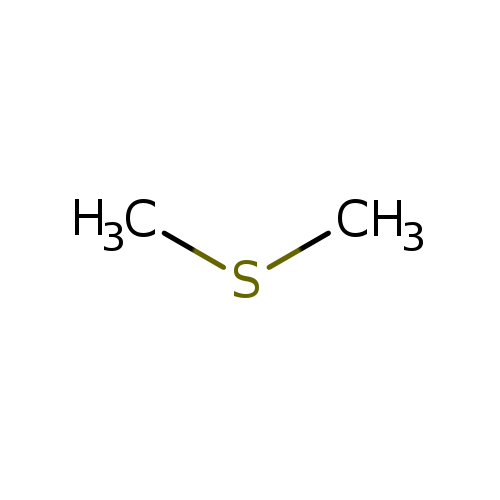
Dimethylsulfide, also known as methyl thioether or 2-thiapropane, belongs to the class of organic compounds known as dialkylthioethers. These are organosulfur compounds containing a thioether group that is substituted by two alkyl groups. Dimethylsulfide exists in all living species, ranging from bacteria to plants to humans. Based on a literature review a significant number of articles have been published on Dimethylsulfide.
belongs to the class of organic compounds known as dialkylthioethers. These are organosulfur compounds containing a thioether group that is substituted by two alkyl groups.
Fat tissue. Stores energy as triglycerides and releases fatty acids and hormones; in cattle it lies under the skin, around organs and as marbling within muscle.
Al-Attabi et al. [71] reported that sulfur compounds such as hydrogen sulfide, methanthiol, dimethyl sulfide, and dimethyl trisulfide were present in commercial ultra-heat-treated milk samples at levels above their documented odor thresholds.
Written in the paper as “dimethyl sulfide” and “milk”
Five identified compounds (1H-indole, 2-methyl pyridine, benzaldehyde, dimethyl sulfide, dimethyl sulfone) have been associated with normal ruminant physiology in cattle [61, 81].
Written in the paper as “dimethyl sulfide” and “normal ruminant physiology”
For example, Shaw et al. (2007) detected primarily oxygenated metabolites in a chamber study of lactating cows, in which the greatest flux of VOC was methanol, acetone, dimethyl sulfide, and 4 methylphenol.
Written in the paper as “dimethyl sulfide” and “chamber”