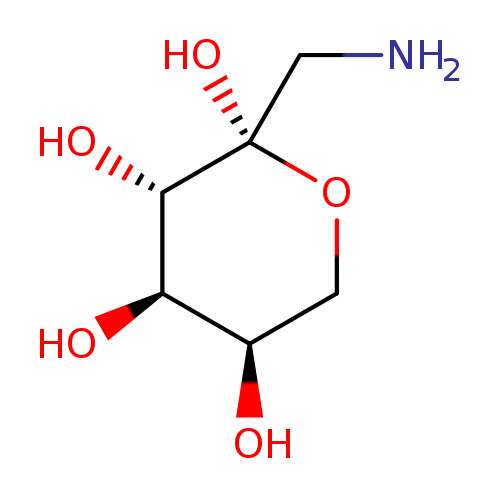
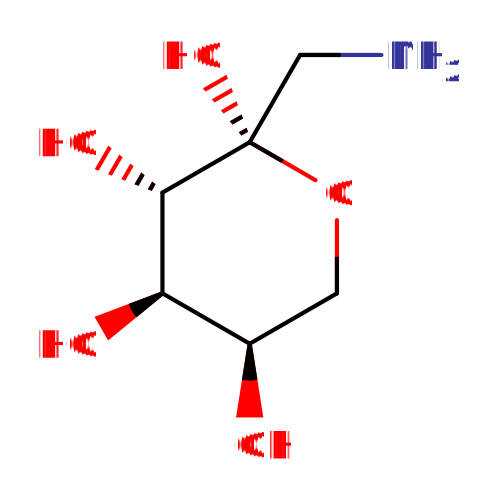
Fructosamine, also known as D-isoglucosamine, belongs to the class of organic compounds known as monosaccharides. Monosaccharides are compounds containing one carbohydrate unit not glycosidically linked to another such unit, and no set of two or more glycosidically linked carbohydrate units. Monosaccharides have the general formula CnH2nOn. Fructosamine is a very strong basic compound (based on its pKa). Fructosamine, with regard to humans, has been found to be associated with several diseases such as diabetes mellitus type 2, cirrhosis, and kidney disease; fructosamine has also been linked to the inborn metabolic disorder 11-beta-hydroxylase deficiency.
belongs to the class of organic compounds known as monosaccharides. Monosaccharides are compounds containing one carbohydrate unit not glycosidically linked to another such unit, and no set of two or more glycosidically linked carbohydrate units. Monosaccharides have the general formula CnH2nOn.
(A) Scatterplot of the relationship between plasma fructosamine concentration (umol/L) at approximately Day 28 postpartum and plasma mean glucose concentration (mg/dL) over the period of 4-28 days postpartum in 103 Holstein-Friesian cattle (32 primiparous, 71 multiparous).
Written in the paper as “fructosamine” and “plasma”
Serum levels of the total protein, albumin, urea, C-reactive protein, cholesterol, fructosamine, alanine aminotransferase (ALT), aspartate aminotransferase (AST), and gamma-glutamyltranspeptidase (GGT) were determined.
Written in the paper as “fructosamine” and “serum”
The preferred plasma protein for glycation in humans is albumin, where 1.4-16.0 of albumin molecules are glycated and approximately 80 of fructosamine is glycated albumin.17
Written in the paper as “Fructosamine” and “glycation”