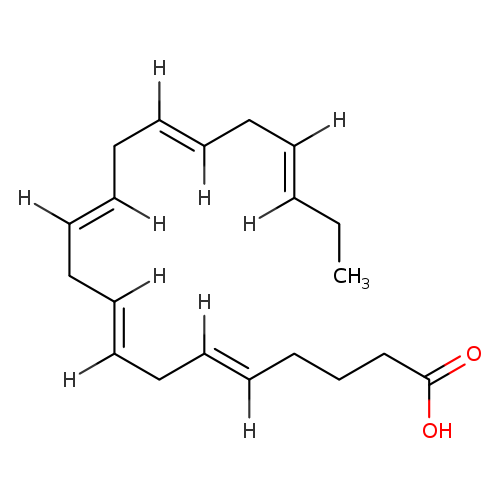
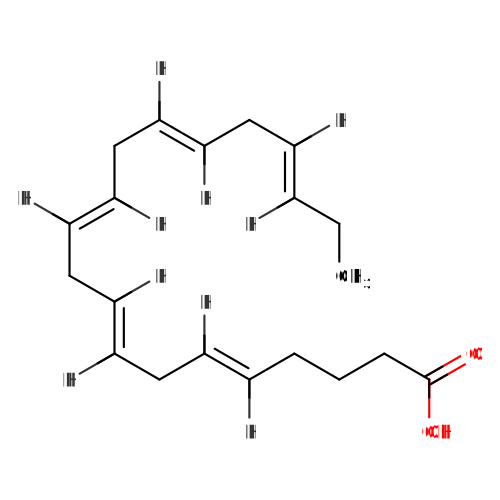
Eicosapentaenoic acid, also known as icosapent or cis-5,8,11,14,17-epa, belongs to the class of organic compounds known as long-chain fatty acids. These are fatty acids with an aliphatic tail that contains between 13 and 21 carbon atoms. Eicosapentaenoic acid is a very hydrophobic molecule, practically insoluble (in water), and relatively neutral. Eicosapentaenoic acid participates in a number of enzymatic reactions, within cattle. In particular, Eicosapentaenoic acid can be biosynthesized from cis-8,11,14,17-eicosatetraenoic acid; which is mediated by the enzyme fatty acid desaturase 1. In addition, Eicosapentaenoic acid can be converted into docosapentaenoic acid (22N-3); which is mediated by the enzyme elongation OF very long chain fatty acids protein 5. In cattle, eicosapentaenoic acid is involved in the metabolic pathway called the Alpha linolenic Acid and linoleic Acid metabolism pathway. Eicosapentaenoic acid has been found to be associated with several diseases known as colorectal cancer, essential hypertension, hypertension, and major depressive disorder; also eicosapentaenoic acid has been linked to the inborn metabolic disorders including isovaleric acidemia.
belongs to the class of organic compounds known as long-chain fatty acids. These are fatty acids with an aliphatic tail that contains between 13 and 21 carbon atoms.
Fat tissue. Stores energy as triglycerides and releases fatty acids and hormones; in cattle it lies under the skin, around organs and as marbling within muscle.
The milk FA profile was altered following the inclusion of EEO in the diet, as demonstrated previously [10], and contents of ALA, SDA, EPA, total n-3, and GLA were similar among studies.
Written in the paper as “eicosapentaenoic acid” and “milk”
and the present study suggests the success of this approach is unlikely be affected by crossbreeding HF with Jersey semen as HF and HF x J cows produced milk with similar concentrations of these FA.
Written in the paper as “eicosapentaenoic acid” and “milk”
Furthermore, the specific lipid metabolism-associated rumen microbiota module enhanced serum eicosapentaenoic acid (EPA) levels by modulating rumen α-linolenic acid metabolism, thereby promoting the synthesis of Pe(20:5/0:0) in milk, which positively contributed to MY.
Written in the paper as “eicosapentaenoic acid” and “serum”
These assessments classified serum samples from heifers between 1-month and 19-months of age as MAP-inoculated or control based on metabolite levels of 8,11,14-eicosatrienoic acid, 10-octadecenoic acid, alpha-linolenic acid, cis-8,11,14,17-eicosatetraenoic acid, eicosapentaenoic acid and heptadecanoic acid
Written in the paper as “eicosapentaenoic acid” and “serum”
Synthesis of LC-PUFAs arachidonic acid and eicosapentaenoic acid mainly occurs in the liver and adipose [30] and suppression of their synthesis in SNEB cows may contribute to the poor fertility in high-yielding dairy herds.
Written in the paper as “eicosapentaenoic acid” and “liver”
Due to the lack of certain elongases and desaturases in the placenta, the biosynthesis of the most important LC-PUFAs, such as DHA or EPA, occurs in the mother and partly in the liver of the foetus18.
Written in the paper as “eicosapentaenoic acid” and “liver”
In addition to CLA, milk fat contains important types of Omega-3 (n-3) FA such as eicosapentaenoic (EPA) and docosahexaenoic (DHA) acids that are essential for normal physiological functioning and human health [51].
Written in the paper as “eicosapentaenoic” and “milk fat”
EPA in the bloodstream and mammary gland can be converted into metabolites (3-series prostaglandins and 5-series leukotrienes) and anti-inflammatory mediators (resolvins, protectins, and maresins) that inhibit inflammatory cell activation and decrease the production of proinflammatory mediators [124, 125].
Written in the paper as “eicosapentaenoic acid” and “bloodstream”
The rumen microbial module facilitates the conversion of dietary a-linolenic acid to GPEtn(12:0/18:3), which may represent a mechanism to delay biohydrogenation, thereby permitting increased delivery of protected a-linolenic acid to the small intestine for absorption and conversion into EPA [123], which subsequently enters the bloodstream and is utilized by the mammary gland to synthesize Pe(20:5/0:0).
Written in the paper as “eicosapentaenoic acid” and “bloodstream”
The contents of triglycerides (TAG), eicosapentaenoic acid (EPA), docosapentaenoic acid (DPA) and docosahexaenoic acid (DHA) have a significant positive correlation with the expression of FADS1 and a significant negative correlation with the expression of miR-193a-5p in BMECs.
Written in the paper as “eicosapentaenoic acid” and “bovine mammary epithelial cells”
Fat tissue. Stores energy as triglycerides and releases fatty acids and hormones; in cattle it lies under the skin, around organs and as marbling within muscle.
Synthesis of LC-PUFAs arachidonic acid and eicosapentaenoic acid mainly occurs in the liver and adipose [30] and suppression of their synthesis in SNEB cows may contribute to the poor fertility in high-yielding dairy herds.
Written in the paper as “eicosapentaenoic acid” and “adipose”
Since, increasing the availability of certain long chain PUFA (e.g. alpha-linolenic, EPA, and DHA) in plasma of periparturient cows was shown to modulate inflammatory responses around parturition [9, 34], further studies on FA trafficking in AT and plasma are needed to improve the efficacy of lipid supplementation in the dry and periparturient periods.
Written in the paper as “eicosapentaenoic acid” and “plasma”
EPA in the bloodstream and mammary gland can be converted into metabolites (3-series prostaglandins and 5-series leukotrienes) and anti-inflammatory mediators (resolvins, protectins, and maresins) that inhibit inflammatory cell activation and decrease the production of proinflammatory mediators [124, 125].
Written in the paper as “eicosapentaenoic acid” and “mammary gland”
Our study also revealed several interesting and potential biomarker metabolites characteristic of repeat breeder cows, including N6-methyllysine, cis-5,8,11,14,17-eicosapentaenoic acid (EPA), and homocitrulline (L-citrulline).
Written in the paper as “cis-5,8,11,14,17-eicosapentaenoic acid” and “repeat breeder”
Biological Processes
Relation
Term
Definition
Sources
Produced by
unsaturated fatty acid biosynthetic process GO:0006636
The chemical reactions and pathways resulting in the formation of an unsaturated fatty acid, any fatty acid containing one or more double bonds between carbon atoms.
They were mostly enriched in the unsaturated fatty acid biosynthesis pathway including accumulation of arachidonic acid (AA), eicosapentaenoic acid (EPA), linoleic acid (LA), oleic acid, 11,14-eicosadienoic acid, and docosahexaenoic acid (DHA).
Written in the paper as “eicosapentaenoic acid” and “unsaturated fatty acid biosynthesis pathway”
FADS2 catalyses the initial desaturation step of a-linolenic acid (C18:3) and linoleic acid (C18:2) in the enzyme cascade that ultimately leads, via FADS1, to synthesis of the long chain polyunsaturated fatty acids (LC-PUFAs) arachidonic acid (C20:4) and eicosapentaenoic acid (C20:5).
Written in the paper as “eicosapentaenoic acid” and “synthesis of the long chain polyunsaturated fatty acids”
Unless protected from rumen biohydrogenation, beef naturally contains a low content of n-3 fatty acids including a-linolenic acid (ALA; 18:3n-3) and its long-chain (LC) elongation and desaturation products EPA, docoasapentaenenoic acid (DPA) and docosahexaenoic acid (DHA) [23].
Written in the paper as “eicosapentaenoic acid” and “desaturation”
The immediate defensive reaction (by vertebrate tissue) to infection or injury caused by chemical or physical agents. The process is characterized by local vasodilation, extravasation of plasma into intercellular spaces and accumulation of white blood cells and macrophages.
Generally, inflammation is reduced by n-3 PUFAs (such as eicosapentaenoic acid and docosahexaenoic acid; Figure 3) and promoted by n-6 PUFAs (such as 5-HETE and leukotriene B4; Figure 3) [35].
Written in the paper as “eicosapentaenoic acid” and “inflammation”
The chemical reactions and pathways involving lipids, compounds soluble in an organic solvent but not, or sparingly, in an aqueous solvent. Includes fatty acids; neutral fats, other fatty-acid esters, and soaps; long-chain (fatty) alcohols and waxes; sphingoids and other long-chain bases; glycolipids, phospholipids and sphingolipids; and carotenes, polyprenols, sterols, terpenes and other isoprenoids.
These metabolites were primarily involved in pathways concerning the metabolism of leucine, isoleucine, valine, tryptophan and lipids, such as myristate and eicosapentaenoate.
Written in the paper as “eicosapentaenoate” and “metabolism of lipids”
Inhibits
mechanistic target of rapamycin complex 1 activation
Palmitate activates mTORC1 by enhancing the recruitment of mTOR onto lysosomal membranes, which is inhibited by co-incubation with oleate or eicosapentaenoic acid [108].
Written in the paper as “eicosapentaenoic acid” and “mechanistic target of rapamycin complex 1 activation”
The appearance of tumor necrosis factor due to biosynthesis or secretion following a cellular stimulus, resulting in an increase in its intracellular or extracellular levels. Tumor necrosis factor is an inflammatory cytokine produced by macrophages/monocytes during acute inflammation and which is responsible for a diverse range of signaling events within cells, leading to necrosis or apoptosis.
Arachidonic acid discourages M. tuberculosis growth by stimulating the secretion of TNF-a but eicosapentaenoic acid supported colonisation by inhibiting TNF-a secretion [35].
Written in the paper as “eicosapentaenoic acid” and “TNF-a secretion”
Produced by
a-linolenic acid to eicosapentaenoic acid conversion
The estimated additional VLC n-3 PUFA intake with organic milk does not take into account potential increases in the ALA to EPA conversion rates associated with the lower LA:ALA ratio in organic milk/dairy products (discussed below) and the relative capacity of individuals to convert/elongate ALA into longer-chain n-3 PUFA( 73 - 75 ).
Written in the paper as “eicosapentaenoic acid” and “a-linolenic acid to eicosapentaenoic acid conversion”
Produced by
alpha-linolenic acid conversion into eicosapentaenoic acid
Other physiological changes from other primates point to TASF nutrition (intake, absorption, and metabolism), including the lost capacity to absorb vitamin B12 derived from gut bacteria [21]; preferential absorption of heme iron versus non-heme iron [22,23]; greater dependency on dietary choline [21,24]; reduced capacity to produce taurine from amino acid precursors [25,26]; and lowered levels of alpha-linolenic acid conversion into eicosapentaenoic acid (EPA)/docosahexaenoic (DHA) [27].
Written in the paper as “eicosapentaenoic acid” and “alpha-linolenic acid conversion into eicosapentaenoic acid”
Furthermore, the specific lipid metabolism-associated rumen microbiota module enhanced serum eicosapentaenoic acid (EPA) levels by modulating rumen α-linolenic acid metabolism, thereby promoting the synthesis of Pe(20:5/0:0) in milk, which positively contributed to MY.
Written in the paper as “eicosapentaenoic acid” and “rumen α-linolenic acid metabolism”
The metabolites that formed part of the alpha-linolenic acid/linoleic acid (C18:2) pathway were previously suggested to be potential biomarkers for MAP infection in heifer calves [16].
Written in the paper as “eicosapentaenoic acid” and “alpha-linolenic acid/linoleic acid (C18:2) pathway”
Due to the lack of certain elongases and desaturases in the placenta, the biosynthesis of the most important LC-PUFAs, such as DHA or EPA, occurs in the mother and partly in the liver of the foetus18.
Written in the paper as “eicosapentaenoic acid” and “biosynthesis of the most important long chain poly-unsaturated fatty acids”
EPA can inhibit pro-inflammatory factors, promote brain and visual development, and may positively influence energy metabolism and lipid balance (Xiong et al., 2024).
Written in the paper as “eicosapentaenoic acid” and “brain and visual development”
The process whose specific outcome is the progression of the brain over time, from its formation to the mature structure. Brain development begins with patterning events in the neural tube and ends with the mature structure that is the center of thought and emotion. The brain is responsible for the coordination and control of bodily activities and the interpretation of information from the senses (sight, hearing, smell, etc.).
The lipid content in infant formulas is designed to mimic the composition and amount in breast milk and consists of long-chain polyunsaturated fatty acids (LCPUFAs), such as eicosapentaenoic acid (EPA) [121] and docosahexaenoic acid (DHA), for proper brain development [122] as well as arachidonic acid (ARA) for proper nervous system and muscles development [123].
Written in the paper as “eicosapentaenoic acid” and “brain development”
The rumen microbial module facilitates the conversion of dietary a-linolenic acid to GPEtn(12:0/18:3), which may represent a mechanism to delay biohydrogenation, thereby permitting increased delivery of protected a-linolenic acid to the small intestine for absorption and conversion into EPA [123], which subsequently enters the bloodstream and is utilized by the mammary gland to synthesize Pe(20:5/0:0).
Written in the paper as “eicosapentaenoic acid” and “conversion into eicosapentaenoic acid”
These resolvins are produced through the modification of EPA by endothelial cells in the presence of aspirin via acetylation of COX2 or through cytochrome p450 conversion, transforming cellular enzymatic activity by blocking prostaglandin synthesis and allowing for inflammatory resolution [77] [78] [79].
Written in the paper as “eicosapentaenoic acid” and “cytochrome p450 conversion”
In addition, previous research has shown that EPA and DHA in fish oil have a stimulatory effect on duodenal secretion of CCK, which has a direct inhibitory effect on intestinal motility, reducing the rate of passage75.
Written in the paper as “eicosapentaenoic acid” and “duodenal secretion of cholecystokinin”
These genes are both involved in the production of SPMs derived from eicosapentaenoic acid (EPA), specifically the production of E-series 18(S)-resolvins.
Written in the paper as “eicosapentaenoic acid” and “production of E-series 18(S)-resolvins”
Unless protected from rumen biohydrogenation, beef naturally contains a low content of n-3 fatty acids including a-linolenic acid (ALA; 18:3n-3) and its long-chain (LC) elongation and desaturation products EPA, docoasapentaenenoic acid (DPA) and docosahexaenoic acid (DHA) [23].
Written in the paper as “eicosapentaenoic acid” and “elongation”
Produced by
endogenous formation of Polyunsaturated fatty acids
EPA is an omega-3 long-chain fatty acid that is essential for proper fetal development and healthy aging; supplementation with omega-3 long-chain fatty acids during pregnancy has been linked to decreased immune responses in infants [26].
Written in the paper as “cis-5,8,11,14,17-eicosapentaenoic acid” and “fetal development”
It is of note that EPA inhibits the formation of pro-inflammatory prostaglandin E2 from arachidonic acid via competitively binding with cyclooxygenase-1 and cyclooxygenase-2, promoting the production of less-inflammatory prostaglandin E3 (28).
Written in the paper as “eicosapentaenoate” and “formation of pro-inflammatory prostaglandin E2”
EPA is an omega-3 long-chain fatty acid that is essential for proper fetal development and healthy aging; supplementation with omega-3 long-chain fatty acids during pregnancy has been linked to decreased immune responses in infants [26].
Written in the paper as “cis-5,8,11,14,17-eicosapentaenoic acid” and “healthy aging”
The depressive effects of fish oil on feed intake have mainly been attributed to the stimulatory effects of its high EPA and DHA65 on the secretion of CCK66, gut peptides67 and hepatic oxidation68.
Written in the paper as “eicosapentaenoic acid” and “hepatic oxidation”
Any process involved in the development or functioning of the immune system, an organismal system for calibrated responses to potential internal or invasive threats.
In addition, DHA and EPA are considered potent anti-inflammatory products, able to reduce the risk of insulin resistance and ameliorate obesity-associated disorders [112,113].
Written in the paper as “eicosapentaenoic acid” and “insulin resistance”
Inhibits
interleukin-10 production
The appearance of interleukin-10 due to biosynthesis or secretion following a cellular stimulus, resulting in an increase in its intracellular or extracellular levels.
Notably, EPA exhibits inhibitory effects on IL-10 production within dendritic cells [41], T cells [42] and B cells [43]; IL-10 is a key cytokine in early-phase MAP infections [44].
Written in the paper as “eicosapentaenoic acid” and “interleukin-10 production”
The removal of one or more electrons from a lipid, with or without the concomitant removal of a proton or protons, by reaction with an electron-accepting substance, by addition of oxygen or by removal of hydrogen.
The amino acid metabolites including N-acetylneuraminic acid, N-g-acetyl-N-2-formyl-5-methylkynurenine, and glycyl-phenylalanine (Gly-Phe) were significantly upregulated (Fig. S3e, c, and f) indicating the elevated amino acid metabolism, while metabolites associated with lipid oxidation including thromboxane B2 (TXB2), arachidonic acid (AA), and eicosapentaenoic acid (EPA) were significantly downregulated (Figs. S4d, c, and v).
Written in the paper as “eicosapentaenoic acid” and “lipid oxidation”
Once absorbed, a-linolenic acid is transported to the liver and converted to EPA which enters the circulation and serves as a precursor for milk Pe(20:5/0:0) biosynthesis.
Written in the paper as “eicosapentaenoic acid” and “milk Pe(20:5/0:0) biosynthesis”
Involved in
negative regulation of inflammatory response GO:0050728
Any process that stops, prevents, or reduces the frequency, rate or extent of the inflammatory response.
Specifically, exosome treatment increased levels of eicosapentaenoic acid and docosahexanoic acid (lipid metabolites), which are known for their role in reducing inflammation [31,32].
Written in the paper as “eicosapentaenoic acid” and “reducing inflammation”
Specifically, bovine milk-based formulas require targeted fortification with neurodevelopment-associated lipids, especially polar phospholipids such as sphingomyelin and phosphatidylethanolamine, as well as long-chain polyunsaturated fatty acids like DHA and EPA, to mimic the lipid features of porcine and human milk.
Written in the paper as “eicosapentaenoic acid” and “neurodevelopment”
Other essential FAs needed for normal human development are linoleic C18:2 (n-6), a-linolenic C18:3 (n-3), eicosapentaenoic C20:5 (n-3; EPA), docosahexaenoic C22:6 (n-3; DHA), g-linolenic C18:3 (n-6), and arachidonic C20:4 (n-6) acids [42,43].
Written in the paper as “eicosapentaenoic C20:5 (n-3)” and “normal human development”
Eicosapentaenoic acid is an omega-3 fatty acid usually found in fatty fish such as salmon, but also pasture-raised land animals, and has several health benefits, including antidepressant activities and prevention of coronary heart disease thrombosis blood clots and arterial plaque formation (Russell and Burgin-Maunder, 2012).
Written in the paper as “eicosapentaenoic acid” and “prevention of coronary heart disease thrombosis blood clots and arterial plaque formation”
It is of note that EPA inhibits the formation of pro-inflammatory prostaglandin E2 from arachidonic acid via competitively binding with cyclooxygenase-1 and cyclooxygenase-2, promoting the production of less-inflammatory prostaglandin E3 (28).
Written in the paper as “eicosapentaenoate” and “production of less-inflammatory prostaglandin E3”
These genes are both involved in the production of SPMs derived from eicosapentaenoic acid (EPA), specifically the production of E-series 18(S)-resolvins.
Written in the paper as “eicosapentaenoic acid” and “production of specialized pro-resolvin mediators”
The negative effect of fish oil on FA BH has been attributed to its EPA and DHA toxic effects on the rumen bacteria responsible for BH, particularly those involved in the reduction of CLA to VA157,158 and those that reduce VA to C18:0159,160.
Written in the paper as “eicosapentaenoic acid” and “reduce VA to C18:0”
The negative effect of fish oil on FA BH has been attributed to its EPA and DHA toxic effects on the rumen bacteria responsible for BH, particularly those involved in the reduction of CLA to VA157,158 and those that reduce VA to C18:0159,160.
Written in the paper as “eicosapentaenoic acid” and “reduction of CLA to VA”
The depressive effects of fish oil on feed intake have mainly been attributed to the stimulatory effects of its high EPA and DHA65 on the secretion of CCK66, gut peptides67 and hepatic oxidation68.
Written in the paper as “eicosapentaenoic acid” and “secretion of cholecystokinin”
The entirety of a process in which information is transmitted within a biological system. This process begins with an active signal and ends when a cellular response has been triggered.
FADS2 catalyses the initial desaturation step of a-linolenic acid (C18:3) and linoleic acid (C18:2) in the enzyme cascade that ultimately leads, via FADS1, to synthesis of the long chain polyunsaturated fatty acids (LC-PUFAs) arachidonic acid (C20:4) and eicosapentaenoic acid (C20:5).
Written in the paper as “eicosapentaenoic acid” and “Synthesis of long chain polyunsaturated fatty acids arachidonic acid and eicosapentaenoic acid”
EPA has the ability to partially block the conversion of the omega-6 fatty acids to harmful eicosanoids, thereby reducing the cardiovascular risk and inhibiting tumour genesis.
Written in the paper as “eicosapentaenoic acid” and “tumour genesis”
Mart nez-Alvaro et al [62] developed microbiota-driven breeding strategies to improve beef quality with increased content of long-chain n-3 FAs (C18:3n-3, C20:5n-3, C22:5n-3, and C22: 6n-3), cis-9, trans-11 C18:2, and trans-11 C18:1, which is beneficial for human health.
Written in the paper as “C20:5n-3” and “beef quality”
The depressive effects of fish oil on feed intake have mainly been attributed to the stimulatory effects of its high EPA and DHA65 on the secretion of CCK66, gut peptides67 and hepatic oxidation68.
Written in the paper as “eicosapentaenoic acid” and “dry matter intake”
In addition to the shift in partitioning of dietary FA towards adipose tissue, a lower milk fat content with FO compared with SO diets may also be partly caused by a high level of EPA and DHA in fish oil, as well as a higher production of certain BH intermediates known to inhibit mammary gland de novo FA synthesis, such as t10,c12-CLA and t10-C18:163,115,116.
Written in the paper as “eicosapentaenoic acid” and “milk fat content”
The PLS-PM module provided an integrated analysis of the relationships among rumen microbial module 6, rumen GPEtn(12:0/18:3), serum EPA, milk Pe(20:5/0:0), and MY.
Written in the paper as “eicosapentaenoic acid” and “milk yield”
In addition, previous research has shown that EPA and DHA in fish oil have a stimulatory effect on duodenal secretion of CCK, which has a direct inhibitory effect on intestinal motility, reducing the rate of passage75.
Written in the paper as “eicosapentaenoic acid” and “rate of passage”
The following super pathways and their respective metabolites were found to contribute to the differences between pasture-finished and grain-finished samples; lipid metabolites such as alpha-linolenic acid (ALA) and eicosapentaenoic acid (EPA), phytochemicals/xenobiotics such as benzoylcarnitine, 4-ethylphenylsulfate, and phenol sulfate, vitamins including gamma/beta tocopherol (a precursor of Vitamin E) and niacin (Vitamin B3), and various amino acid metabolites including S-methylmethionine and homocysteine, which are involved in the S-adenosylmethione (SAM) cycle (Fig. 2; Supplementary Table 1).
Written in the paper as “eicosapentaenoic acid” and “pasture”
More specifically, pasture-finished beef contained 3.5-fold and 2.6-fold higher amounts of eicosapentaenoic (EPA) and docosapentaenoic acid (DPA), respectively, compared to grain-finished beef.
Written in the paper as “eicosapentaenoic acid” and “pasture”
Similar to this study, Di Grigoli et al. [2] also found higher concentrations of EPA and DHA in the milk of grazing cows compared to the free-stall building system.
Written in the paper as “eicosapentaenoic acid” and “grazing pastures”
Previous work recommends adopting low-input pasture-based dairying as a strategy to increase the beneficial FA (PUFA, n-3, VA, RA, ALNA, EPA, and DPA); and the present study suggests the success of this approach is unlikely be affected by crossbreeding HF with Jersey semen as HF and HF x J cows produced milk with similar concentrations of these FA.
Written in the paper as “eicosapentaenoic acid” and “pasture”
This study confirms earlier findings that milk from cows consuming significant amounts of grass and legume-based forages contains less LA and other w-6 FAs and higher concentrations of ALA, CLA, and the long-chain w-3s EPA and DPA, compared to cows lacking routine access to pasture and fed substantial quantities of grains [17]-[23], [32], [58].
Written in the paper as “eicosapentaenoic acid” and “grass”
However, despite reducing milk yield and milk fat content, fish oil supplementation improved the milk health index by increasing the concentrations of C18:2, c9,t11-CLA as well as EPA and DHA compared with soybean oil.
Written in the paper as “eicosapentaenoic acid” and “fish oil”
In addition, previous research has shown that EPA and DHA in fish oil have a stimulatory effect on duodenal secretion of CCK, which has a direct inhibitory effect on intestinal motility, reducing the rate of passage75.
Written in the paper as “eicosapentaenoic acid” and “fish oil”
The AMS herbage contained higher concentrations of gamma-tocopherol (vitamin E) and eicosapentaenoic acid (EPA), which were reflected in elevated levels of these compounds in the beef (P < 0.05) and, subsequently, in human plasma 3 to 5 h postprandial (P < 0.05).
Written in the paper as “eicosapentaenoic acid” and “adjacent monoculture strips”
Food material which can be used to meet nutritional requirements of animals, particularly livestock such as cattle, goats, sheep, horses, chickens and pigs.
Following FDR correction (FDR < 0.05), among the plasma variables that exhibited a significant increase in concentration or values, there were seven amino acids or related metabolites (1-methylhistidine, 3-methylhistidine, 5-aminovaleric acid, b-aminobutyric acid, betaine, sarcosine, and glycine), four fatty acids (docosahexaenoic, eicosapentaenoic, octadecenoic, and octadecadienoic acids), as well as non-esterified fatty acids and the natural abundance of15N.
Written in the paper as “eicosapentaenoic acid” and “feed”
The levels of five (C14:1, C18:1n11t, CLA:10t12c, C20:3n3 and C20:5n3) out of 13 USFAs measured increased significantly (P < 0.05 to ) in response to both treatments (Table 1).
They agreed with the previous findings [67,68] that, compared to cows without regular access to pasture and fed substantial amounts of forages, milk from these forage-eating cows has higher concentrations of ALA, CLA, and the long-chain omega-3s EPA and DPA, and lower levels of LA and other omega-6 FAs.
Written in the paper as “eicosapentaenoic acid” and “forages”
The following super pathways and their respective metabolites were found to contribute to the differences between pasture-finished and grain-finished samples; lipid metabolites such as alpha-linolenic acid (ALA) and eicosapentaenoic acid (EPA), phytochemicals/xenobiotics such as benzoylcarnitine, 4-ethylphenylsulfate, and phenol sulfate, vitamins including gamma/beta tocopherol (a precursor of Vitamin E) and niacin (Vitamin B3), and various amino acid metabolites including S-methylmethionine and homocysteine, which are involved in the S-adenosylmethione (SAM) cycle (Fig. 2; Supplementary Table 1).
Written in the paper as “eicosapentaenoic acid” and “grain”
This study confirms earlier findings that milk from cows consuming significant amounts of grass and legume-based forages contains less LA and other w-6 FAs and higher concentrations of ALA, CLA, and the long-chain w-3s EPA and DPA, compared to cows lacking routine access to pasture and fed substantial quantities of grains [17]-[23], [32], [58].
Written in the paper as “eicosapentaenoic acid” and “legume-based forages”
Satureja is a genus of aromatic plants of the family *Lamiaceae*, related to rosemary and thyme. There are about 30 species called savories, of which Summer savory and Winter savory are the most important in cultivation.
Including SP in the diet increased the proportions of all the milk n-3 FA (C18:3c, C20:5, and C22:6) by 21%, 40%, and 97%, respectively, and those of conjugated linoleic acids (C18:2 (c9,t11-CLA) and C18:2 (t10,c12-CLA)) by 23% and 62%, respectively.
Written in the paper as “C20:5” and “savory plant”
The high silage diet promoted the deposition of 14:1c9, 15:0, 18:3n-3, 20:5n-3, 22:5n-3, 22:6n-3 and 23:0 when compared to the low silage diet (P < 0.05).
Written in the paper as “20:5n-3” and “silage diet”
An oil extracted from the seeds of <em>Glycine max</em>. Typical fatty acid composition is 51% linoleic acid, 7-10% α-linolenic acid, 23% oleic acid, 10% palmitic acid and 4% stearic acid.
Bernal-Santos et al.[21] demonstrated that EPA levels in milk plateaued after day 3 of ruminal infusion of SDA-rich soybean oil, however, if treatments in the current study had been longer, EPA levels in milk and plasma may have increased.
Written in the paper as “eicosapentaenoic acid” and “soybean oil”
Among the n-3 FAs, C20:5 (EPA: eicosapentaenoic acid) and C22:6 (DHA: docosahexaenoic acid) were absent in the rumen of cows fed SO diets, but the proportion of C18:3c (ALA) was higher in this group compared to cows fed FO diets (P < 0.001), and the inclusion of SP in the diet increased the proportion of ALA as well as DHA in the rumen (P < 0.05).
Written in the paper as “C20:5” and “soybean oil diets”
Once absorbed, a-linolenic acid is transported to the liver and converted to EPA which enters the circulation and serves as a precursor for milk Pe(20:5/0:0) biosynthesis.
Written in the paper as “eicosapentaenoic acid” and “precursor”
Derivatives of ALA are represented by docosahexaenoic acid (DHA), which is necessary for brain development14, and eicosapentaenoic acid (EPA), a precursor of numerous prostanoids and leukotrienes that are essential in foetal development.
Written in the paper as “eicosapentaenoic acid” and “precursor”
In addition, serum metabolite analysis revealed that milk EVs affected lipid and amino acid metabolism, especially anti-inflammatory factors such as lysophosphatidylcholines, deoxycholic acid, eicosapentaenoic acid, related to immune and metabolic diseases (Du et al., 2021).
Written in the paper as “eicosapentaenoic acid” and “anti-inflammatory factors”
AEE could improve vascular endothelial injury by upregulating antioxidant substance which included eicosapentaenoic acid (EPA), choline, coenzyme A (CoA), glutathione (GSH), catalase (CAT) and superoxide dismutase (SOD), as well as downregulating substances that cause endothelial oxidative damage, including phytosphingosine (PS), palmitic acid (PA), and arachidonic acid (AA).
Written in the paper as “eicosapentaenoic acid” and “antioxidant substance”
Sandri, Jacqueline; Viala, Jacques. Syntheses of all-(Z)-5,8,11,14,17-Eicosapentaenoic Acid and all-(Z)-4,7,10,13,16,19-Docosahexaenoic Acid from (Z)-1,1,6,6-tetraisopropoxy-3-hexene. Journal of Organic Chemistry (1995), 60(20), 6627-30.
Material Safety Data Sheet (MSDS)
Not Available
General References
Jensen RG: The composition of bovine milk lipids: January 1995 to December 2000. J Dairy Sci. 2002 Feb;85(2):295-350. doi: 10.3168/jds.S0022-0302(02)74079-4. [PubMed:11913692 ]
Colman E, Fokkink WB, Craninx M, Newbold JR, De Baets B, Fievez V: Effect of induction of subacute ruminal acidosis on milk fat profile and rumen parameters. J Dairy Sci. 2010 Oct;93(10):4759-73. doi: 10.3168/jds.2010-3158. [PubMed:20855010 ]
Glasser F, Ferlay A, Chilliard Y: Oilseed lipid supplements and fatty acid composition of cow milk: a meta-analysis. J Dairy Sci. 2008 Dec;91(12):4687-703. doi: 10.3168/jds.2008-0987. [PubMed:19038946 ]
M. Ferrand, B. Huquet. S. Barbey, F. Barillet, F. Faucon, H. Larroque, O. Leray, J.M. Trommenschlager, M. Brochard (2011). M. Ferrand et al. Determination of fatty acid profile in cow's milk using mid-infrared spectrometry: Interest of applying a variable selection by genetic algorithms before a PLS regression. Chemometrics and Intelligent Laboratory Systems 106 (2011) 183?189. Chemometrics and Intelligent Laboratory Systems.
M.J. Abarghuei, Y. Rouzbehan, A.Z.M Salem, M.J. Zamiri (2014). M.J. Abarghuei, Y. Rouzbehan, A.Z.M Salem, M.J. Zamiri. Nitrogen balance, blood metabolites and milk fatty acid composition of dairy cows fed pomegranate-peel extract. Livestock Science (2014) 164:72-80 doi: 10.1016/j.livsci.2014.03.021. Livestock Science.
Catalyzes the first and rate-limiting reaction of the four reactions that constitute the long-chain fatty acids elongation cycle. This endoplasmic reticulum-bound enzymatic process allows the addition of 2 carbons to the chain of long- and very long-chain fatty acids (VLCFAs) per cycle. Condensing enzyme that acts specifically toward polyunsaturated acyl-CoA with the higher activity toward C18:3(n-6) acyl-CoA. May participate in the production of monounsaturated and of polyunsaturated VLCFAs of different chain lengths that are involved in multiple biological processes as precursors of membrane lipids and lipid mediators (By similarity). In conditions where the essential linoleic and alpha linoleic fatty acids are lacking it is also involved in the synthesis of Mead acid from oleic acid (By similarity).