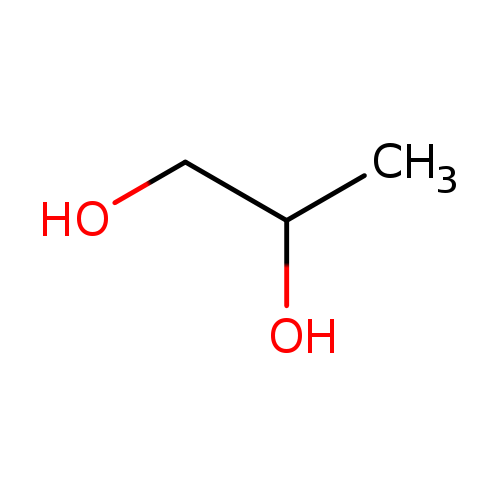
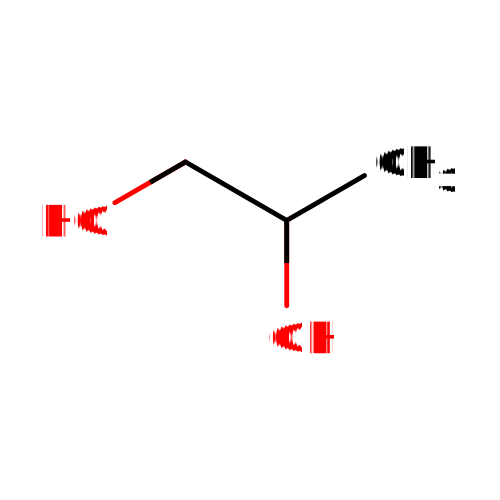
Propylene glycol, also known as 1,2-propanediol or methyl glycol, belongs to the class of organic compounds known as 1,2-diols. These are polyols containing an alcohol group at two adjacent positions. Propylene glycol is an extremely weak basic (essentially neutral) compound (based on its pKa). Propylene glycol exists in all living species, ranging from bacteria to humans. Propylene glycol is a potentially toxic compound.
With respect to mid- and late-lactation milk, multivariate analysis of the milk metabolome identified key metabolites responsible for the separation between these lactation stages, including 1,2-propandiol, 3-hydroxybutyrate, butyrate, N-acetyl-X4, galactose-1-P, glucose-1-P, N-acetyl-glucosamine and cytidine-X-P [19].
Written in the paper as “1,2-propandiol” and “milk”
However it is unlikely that PG itself induced the pulmonary vasoconstriction because high plasma concentrations of PG have been attained in previous studies without any apparent effects on the cows [2,15].
Written in the paper as “propylene glycol” and “plasma”
Ethanolamine and 1,2-propanediol are released in the gut through microbial fermentation of dietary and host-derived substrates such as phosphatidylcholine, fucose, and rhamnose [33,141,142].
Written in the paper as “1,2-propanediol” and “gut”
Metabolism of PG in ruminants involves microbial metabolism in the rumen and hepatic metabolism of products of ruminal fermentation (propanol, propanal, and propionate) as well as PG absorbed to the portal blood [2].
Written in the paper as “Propylene glycol” and “portal blood”
Therefore, the primary treatment for ketosis continues to be the use of propylene glycol, either in liquid form for oral treatment or as a powder mixed into the total ration (Ospina et al., 2013; McArt et al., 2011).
Written in the paper as “propylene glycol” and “ketosis”
Supplementation of propylene glycol in the diet or the use of monensin, either in the diet or in the form of a slow‐release bolus, can help prevent the occurrence of ketosis.
Written in the paper as “propylene glycol” and “ketosis”
For instance, studies on calcium propionate and propylene glycol have shown that supplying a direct precursor for gluconeogenesis is an effective strategy to prevent ketosis.
Written in the paper as “propylene glycol” and “ketosis”
These results are similar to those found by Oetzel (2004), who found that adding propylene glycol can boost energy levels and lower the risk of ketosis during early lactation, which leads to more milk production.
Written in the paper as “propylene glycol” and “ketosis”
Propylene glycol treatments have shown effectiveness in mitigating ketosis, although the long-term impacts on herd health are still under review [49,60].
Written in the paper as “Propylene glycol” and “ketosis”
Cows suspected by the herdsman to have ketosis were administered oral propylene glycol daily for 1-5 days after blood samples were collected; however, blood samples in these cows were always obtained > 20 hours after the previous treatment with propylene glycol.
Written in the paper as “propylene glycol” and “ketosis”
Animals with acetoacetic acid concentrations above 10 mmol/L but without concomitant clinical signs were considered to be subclinically ketotic and were treated orally with 250 mL propylene glycol twice daily, administered by drench gun until ketosis resolved.
Written in the paper as “propylene glycol” and “ketosis”
For clinical ketosis (administered to 2 cows during the study) the treatment included 2 days of intravenous 50 dextrose and 5 days of 300Ml of propylene glycol.
Written in the paper as “propylene glycol” and “clinical ketosis”
Hence, propylene glycol alone remains the recommended treatment for clinical and SCK, as supported by previous studies highlighting its positive effects in resolving the metabolic condition, preventing clinical ketosis, and improving milk production in early lactation (McArt et al., 2011).
Written in the paper as “propylene glycol” and “clinical ketosis”
Propylene glycol is particularly favored for oral glucose precursor supplementation due to its palatability, efficient absorption, and effective conversion to glucose in hepatic metabolism, with clinical trials demonstrating that daily oral propylene glycol administration at 300-500 g per day for 5-7 days significantly accelerates recovery from clinical ketosis [164].
Written in the paper as “propylene glycol” and “clinical ketosis”
Hence, propylene glycol alone remains the recommended treatment for clinical and SCK, as supported by previous studies highlighting its positive effects in resolving the metabolic condition, preventing clinical ketosis, and improving milk production in early lactation (McArt et al., 2011).
Written in the paper as “propylene glycol” and “subclinical ketosis”
Standard therapeutic interventions include oral administration of glucogenic precursors such as propylene glycol, intravenous glucose infusions in more severe cases, and short-term use of glucocorticoids to stimulate hepatic gluconeogenesis and reduce milk yield-associated glucose demand [164,170,172].
Written in the paper as “propylene glycol” and “Type I ketosis”
Specifically, these interventions involve optimizing transition diets, ensuring adequate provision of glucogenic precursors, and providing timely supplementation with propylene glycol to enhance hepatic gluconeogenesis and mitigate excessive ketone body production [140,166].
Written in the paper as “propylene glycol” and “Type I ketosis”
This phenomenon is not associated with a significant change in hepatic total lipid level but more a local defense mechanism to prevent fatty liver formation (Gyorffy et al. 2009).
Written in the paper as “propylene glycol” and “fatty liver”
Strategies for OFCs focus more on nutritional management, improving energy balance (e.g., with propylene glycol in ketotic cows), and modulating local hormonal and growth factor environments.
Written in the paper as “propylene glycol” and “ketotic”
They revealed higher levels of ethylene glycol and alanine and lower levels of propylene glycol, 4-hydroxyphenylacetate, acetate and butyrate in the feces of healthy dairy cows compared to the individuals with mastitis.
Written in the paper as “propylene glycol” and “mastitis”
BackgroundIt is unknown which metabolites are responsible for propylene glycol (PG)-induced toxicosis, and a better understanding of the underlying mechanisms explaining incidences of abnormal behaviour of dairy cows fed PG is therefore needed.
Written in the paper as “propylene glycol” and “propylene glycol (propylene glycol)-induced toxicosis”
For instance, studies on calcium propionate and propylene glycol have shown that supplying a direct precursor for gluconeogenesis is an effective strategy to prevent ketosis.
Written in the paper as “propylene glycol” and “gluconeogenesis”
Oral drenching with glucose powder, dextrose monohydrate, or propylene glycol (a glucogenic alcohol readily converted to glucose in the liver) at dosages of 250-500 g per day provides additional glucose precursors that supplement endogenous gluconeogenesis and reduce dependence on repeated intravenous infusions [164].
Written in the paper as “propylene glycol” and “gluconeogenesis”
The metabolic process that uses oxidation-reduction reactions of organic compounds and substrate-level phosphorylation for the generation of adenosine triphosphate (ATP), without consuming oxygen and is independent of electron transport chains.
Utilization of 1,2-PD by pdu-positive lactobacilli generates propionate [33], which downregulates SPI-1 invasion gene expression [128], while conversion of glycerol into reuterin inhibits Salmonella growth [143].
Written in the paper as “1,2-PD” and “microbial fermentation”
Ethanolamine and 1,2-propanediol are released in the gut through microbial fermentation of dietary and host-derived substrates such as phosphatidylcholine, fucose, and rhamnose [33,141,142].
Written in the paper as “1,2-propanediol” and “microbial fermentation”
The chemical reactions and pathways resulting in the breakdown of propanediol, a sweet, colorless, viscous, hygroscopic liquid with the formula CH3-CHOH-CH2OH.
These characteristics make pdu-positive lactobacilli optimal candidates for probiotics aimed at blocking 1,2-PD utilization by S. Dublin in calves, as depicted in Figure 2.
Written in the paper as “1,2-PD” and “1,2-PD utilization”
The enzymatic release of energy from inorganic and organic compounds (especially carbohydrates and fats) which uses compounds other than oxygen (e.g. nitrate, sulfate) as the terminal electron acceptor.
As mentioned earlier, S. Typhimurium ferments the niche nutrients 1,2-PD, ethanolamine, and fructose-asparagine (F-Asn) under anaerobic respiration, making these strong candidates for nutrient blocking by optimized probiotics.
Written in the paper as “1,2-PD” and “anaerobic respiration”
Microbial synthesis of 1,2-PD occurs through the deoxyhexose, methylglyoxal, and lactate pathways, with bacteria and fungi utilizing these pathways under anoxic and aerobic conditions, respectively [16].
Written in the paper as “1,2-PD” and “deoxyhexose pathway”
For example, Salmonella enterica and E. coli benefit from metabolites such as ethanolamine, lactate, glucuronate/galacturonate, propylene glycol, succinate, and L-serine generated during dysbiosis [27-30].
Written in the paper as “propylene glycol” and “dysbiosis”
This substrate is synthesized in the gut by enteric microbes such as S. enterica, Escherichia coli, and Bifidobacterium breve that ferment host-derived fucose and rhamnose into 1,2-PD [33,38].
Written in the paper as “1,2-PD” and “ferment host-derived fucose and rhamnose”
Specifically, these interventions involve optimizing transition diets, ensuring adequate provision of glucogenic precursors, and providing timely supplementation with propylene glycol to enhance hepatic gluconeogenesis and mitigate excessive ketone body production [140,166].
Written in the paper as “propylene glycol” and “hepatic gluconeogenesis”
Involved in
hepatic metabolism of products of ruminal fermentation
Metabolism of PG in ruminants involves microbial metabolism in the rumen and hepatic metabolism of products of ruminal fermentation (propanol, propanal, and propionate) as well as PG absorbed to the portal blood [2].
Written in the paper as “propylene glycol” and “hepatic metabolism of products of ruminal fermentation”
Fucose is then converted into 1,2-PD by Bifidobacterium breve using L-fucose permease (fucP), which is converted to propionate by pdu-positive Lm. reuteri [33].
Written in the paper as “1,2-PD” and “intestinal 1,2-PD production”
The chemical reactions and pathways resulting in the formation of ketones, a class of organic compounds that contain the carbonyl group, CO, and in which the carbonyl group is bonded only to carbon atoms. The general formula for a ketone is RCOR, where R and R are alkyl or aryl groups.
The chemical reactions and pathways resulting in the formation of ketone bodies, any one of the three substances: acetoacetate, D-3-hydroxybutyrate (beta-hydroxybutyrate) or acetone. Biosynthesis involves the formation of hydroxymethylglutaryl-CoA, which is cleaved to acetate and acetyl-CoA.
Specifically, these interventions involve optimizing transition diets, ensuring adequate provision of glucogenic precursors, and providing timely supplementation with propylene glycol to enhance hepatic gluconeogenesis and mitigate excessive ketone body production [140,166].
Written in the paper as “propylene glycol” and “ketone body production”
Microbial synthesis of 1,2-PD occurs through the deoxyhexose, methylglyoxal, and lactate pathways, with bacteria and fungi utilizing these pathways under anoxic and aerobic conditions, respectively [16].
Written in the paper as “1,2-PD” and “lactate pathway”
The chemical reactions and pathways resulting in the breakdown of lipids, compounds soluble in an organic solvent but not, or sparingly, in an aqueous solvent.
Undoubtedly, this study provides a valuable treatment approach that complements the use of propylene glycol alone by incorporating niacin and flunixin meglumine to control lipolysis in cows with ketosis.
Written in the paper as “propylene glycol” and “lipolysis”
Microbial synthesis of 1,2-PD occurs through the deoxyhexose, methylglyoxal, and lactate pathways, with bacteria and fungi utilizing these pathways under anoxic and aerobic conditions, respectively [16].
Written in the paper as “1,2-PD” and “methylglyoxal pathway”
Produced by
microbial fermentation of dietary and host-derived substrates
Ethanolamine and 1,2-propanediol are released in the gut through microbial fermentation of dietary and host-derived substrates such as phosphatidylcholine, fucose, and rhamnose [33,141,142].
Written in the paper as “1,2-propanediol” and “microbial fermentation of dietary and host-derived substrates”
Metabolism of PG in ruminants involves microbial metabolism in the rumen and hepatic metabolism of products of ruminal fermentation (propanol, propanal, and propionate) as well as PG absorbed to the portal blood [2].
Written in the paper as “propylene glycol” and “microbial metabolism in the rumen”
Tetrathionate respiration - and in some cases, nitrate respiration - enhances the competitiveness of S. Typhimurium by enabling the efficient utilization of the unique growth-promoting substrates 1,2-propanediol (1,2-PD), ethanolamine, and fructose-asparagine [29,53-55].
Written in the paper as “1,2-propanediol” and “nitrate respiration”
The 6.8 increase in milk output correlates with Oetzel s (2004) finding that propylene glycol addition improved glucose availability, reducing non-esterified fatty acids (NEFA) mobilization.
Written in the paper as “propylene glycol” and “non-esterified fatty acids (non-esterified fatty acids) mobilization”
Propionogenesis via acrylate34,85,89,96 and lactaldehyde routes40 was another microbial mechanism under host genomic influence lowering CH4 emissions as indicated by negative rgCH4 ( 0.76 to 0.90, P0 > 0.95) for the abundances of microbial genes bcd and pccB involved in propanoyl-CoA metabolism and fucO catalysing the reduction of lactaldehyde into 1,2-propanediol, as well as the highly abundant (RA = 0.08 ) lactate-producing bacteria Kandleria (rgCH4 = 0.87, P0 = 0.99).
Written in the paper as “1,2-propanediol” and “reduction of lactaldehyde into 1,2-propanediol”
Postpartum propylene glycol supplementation induces T4 to T3 conversion and increase the local hepatic leptin and short-form leptin receptor mRNA in the liver (Gyorffy et al. 2009).
Written in the paper as “propylene glycol” and “T4 to T3 conversion”
Tetrathionate respiration - and in some cases, nitrate respiration - enhances the competitiveness of S. Typhimurium by enabling the efficient utilization of the unique growth-promoting substrates 1,2-propanediol (1,2-PD), ethanolamine, and fructose-asparagine [29,53-55].
Written in the paper as “1,2-propanediol” and “Tetrathionate respiration”
Hence, propylene glycol alone remains the recommended treatment for clinical and SCK, as supported by previous studies highlighting its positive effects in resolving the metabolic condition, preventing clinical ketosis, and improving milk production in early lactation (McArt et al., 2011).
Written in the paper as “propylene glycol” and “milk production”
McArt et al. (2011) added that oral propylene glycol therapy proved a highly successful way to prevent and treat ketosis in dairy cows in addition to clearly increasing milk production.
Written in the paper as “propylene glycol” and “milk production”
These results are similar to those found by Oetzel (2004), who found that adding propylene glycol can boost energy levels and lower the risk of ketosis during early lactation, which leads to more milk production.
Written in the paper as “propylene glycol” and “milk output”
These cows displayed an increased likelihood of recovery, reduced susceptibility to clinical ketosis and displaced abomasum, elevated milk yield during the initial lactation month, enhanced conception rates in their first service, and diminished risk of culling (Jenkins et al., 2015).
Written in the paper as “propylene glycol” and “milk yield”
Cascone et al. (7) reported that the treatment with propylene glycol was most effective within the first 7 days of lactation (76.5 ) and had an increase in milk yield and milk quality.
Written in the paper as “propylene glycol” and “milk yield”
These cows displayed an increased likelihood of recovery, reduced susceptibility to clinical ketosis and displaced abomasum, elevated milk yield during the initial lactation month, enhanced conception rates in their first service, and diminished risk of culling (Jenkins et al., 2015).
Written in the paper as “propylene glycol” and “conception rates”
Cascone et al. (7) reported that the treatment with propylene glycol was most effective within the first 7 days of lactation (76.5 ) and had an increase in milk yield and milk quality.
Written in the paper as “propylene glycol” and “milk quality”
Food material which can be used to meet nutritional requirements of animals, particularly livestock such as cattle, goats, sheep, horses, chickens and pigs.
However, reports from practice and sparse reports in the literature describe abnormal behaviour involving observation of shallow breathing, ataxia, salivation, somnolence and depression when adding PG to the feed of dairy cows [3].
Written in the paper as “Propylene glycol” and “feed”
However, the observed clinical signs of the cow that responded badly to the ration are in good agreement with the reports from farmers, extension personnel, and veterinarians on reaction to introduction of PG containing concentrates in dairy herds.
Written in the paper as “propylene glycol” and “concentrates”
A physiological role played by any substance of either plant, animal or artificial origin which contains essential body nutrients that can be ingested by an organism to provide energy, promote growth, and maintain the processes of life.
The present study is based on a test-feeding trial with a pelleted concentrate containing PG, which is under development for use in very early lactation.
Written in the paper as “propylene glycol” and “pelleted concentrate”
Various application forms of PG are in use: oral drench, oro-ruminal infusion devices, top dressed on feed, mixed into pelleted feeds, and mixed into total mixed rations.
Written in the paper as “Propylene glycol” and “pelleted feeds”
Lentilactobacillus buchneri, the heterofermentative strain most used in silage inoculants, improves aerobic stability by degrading moderate amounts of lactic acid and by producing 1,2-propanediol and acetic acid (Oude Elferink et al., 2001).
Written in the paper as “1,2-propanediol” and “silage”
Various application forms of PG are in use: oral drench, oro-ruminal infusion devices, top dressed on feed, mixed into pelleted feeds, and mixed into total mixed rations.
Written in the paper as “Propylene glycol” and “total mixed rations”
Successive 5-day treatment with propylene glycol as glucose precursor [Propane-1, 2-diol] and as carbohydrate replacement therapy (Propylene glycol, El Nasr Pharmaceutical Chemical Company, Cairo-Egypt) via drenching route as a dose of 300 ml/cow/12 hour for 2 days, followed by 150 ml/cow/24hr for another continuous 3 days.
Written in the paper as “propylene glycol” and “glucose precursor”