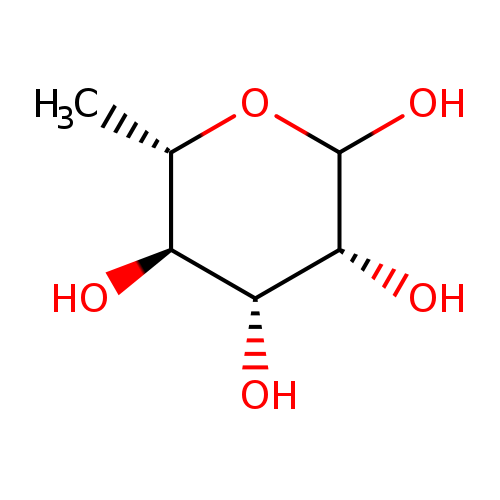
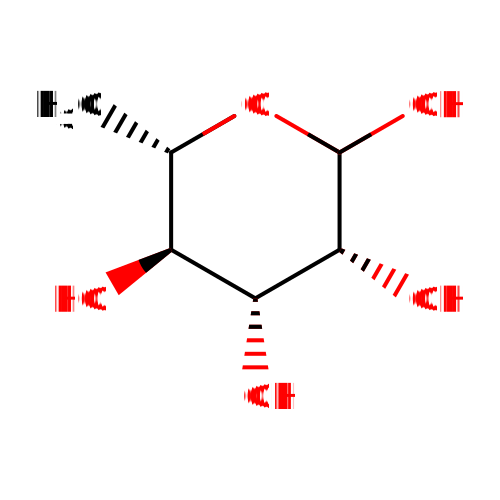
L-Fucose, also known as L-rha or 6-deoxymannose, belongs to the class of organic compounds known as hexoses. These are monosaccharides in which the sugar unit is a is a six-carbon containing moeity. L-Fucose exists as a solid, possibly soluble (in water), and an extremely weak basic (essentially neutral) compound (based on its pKa) molecule. L-Fucose exists in all living organisms, ranging from bacteria to humans. L-Fucose can be converted into fucose 1-phosphate; which is mediated by the enzyme L-fucose kinase. In cattle, L-fucose is involved in the metabolic pathway called the fructose and mannose degradation pathway.
The metabolic process that uses oxidation-reduction reactions of organic compounds and substrate-level phosphorylation for the generation of adenosine triphosphate (ATP), without consuming oxygen and is independent of electron transport chains.
However, phenotypic traits of isolates S46 and S76 aligned more closely with Lactobacillus rhamnosus due to their ability to ferment rhamnose and grow at 45oC (Table 1) [30].
Written in the paper as “rhamnose” and “carbohydrate fermentation”
Ethanolamine and 1,2-propanediol are released in the gut through microbial fermentation of dietary and host-derived substrates such as phosphatidylcholine, fucose, and rhamnose [33,141,142].
Written in the paper as “rhamnose” and “microbial fermentation”
A study by Czerkawski and Breckenridge reported that rhamnose fermentation led to reduced CH4 production and no significant accumulation of hydrogen gas, suggesting that the hydrogen generated is likely utilized in other metabolic processes rather than CH4 production.
Written in the paper as “rhamnose” and “CH4 production production production”
GH78 and GH106 are mainly associated with microbial a-L-rhamnosidase activity, which hydrolyzes a-L-rhamnosidic linkages and removes terminal L-rhamnose residues from rhamnose-containing substrates [31].
Written in the paper as “L-rhamnose” and “microbial a-L-rhamnosidase activity”
Consumed by
microbial fermentation of dietary and host-derived substrates
Ethanolamine and 1,2-propanediol are released in the gut through microbial fermentation of dietary and host-derived substrates such as phosphatidylcholine, fucose, and rhamnose [33,141,142].
Written in the paper as “rhamnose” and “microbial fermentation of dietary and host-derived substrates”
The chemical reactions and pathways resulting in the breakdown of a polysaccharide, a polymer of many (typically more than 10) monosaccharide residues linked glycosidically.
Existing research predominantly attributes [69] Verrucomicrobiota to complex polysaccharide degradation, particularly excelling in utilising sulphated methylpentoses (e.g., fucose and rhamnose), a capability validated in marine ecosystems [70].
Written in the paper as “rhamnose” and “complex polysaccharide degradation”
The sugars released by this hydrolysis, including rhamnose, glucose, and rutinose, are available for ruminal fermentation to produce SCFAs, such as Butyrivibrio-mediated butyric acid production [31].
Written in the paper as “rhamnose” and “ruminal fermentation”
A study by Czerkawski and Breckenridge reported that rhamnose fermentation led to reduced CH4 production and no significant accumulation of hydrogen gas, suggesting that the hydrogen generated is likely utilized in other metabolic processes rather than CH4 production.
Written in the paper as “rhamnose” and “CH4 production production production”
Saccharides differ in terms of their composition and abundance in soymilk (sucrose, stachyose, raffinose, glucose, fructose, verbascose, arabinose, rhamnose) and cow s milk (lactose).
Sanchez Miguel Cambronero, Ruiz Pedro Antonio Garcia. Process for obtaining L-rhamnose of high purity from rhamnoglucosides. 1997, Patent ES2103205A1 (https://patents.google.com/patent/ES2103205A1/en)