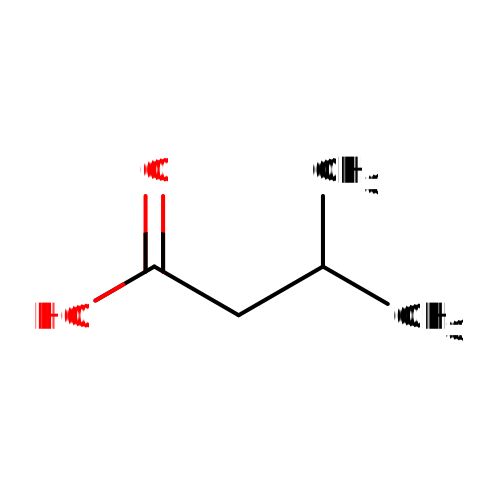
3-Methylbutanoic acid, also known as isovalerate or 3-methylbutyrate, belongs to the class of organic compounds known as methyl-branched fatty acids. These are fatty acids with an acyl chain that has a methyl branch. Usually, they are saturated and contain only one or more methyl group. However, branches other than methyl may be present. 3-Methylbutanoic acid exists as a solid, very hydrophobic, practically insoluble (in water), and relatively neutral molecule. 3-Methylbutanoic acid exists in all living species, ranging from bacteria to humans. 3-Methylbutanoic acid has been found to be associated with several diseases known as crohn's disease, ulcerative colitis, autism, and nonalcoholic fatty liver disease; also 3-methylbutanoic acid has been linked to the inborn metabolic disorders including isovaleric acidemia.
belongs to the class of organic compounds known as methyl-branched fatty acids. These are fatty acids with an acyl chain that has a methyl branch. Usually, they are saturated and contain only one or more methyl group. However, branches other than methyl may be present.
Less abundant VFA such as isobutyrate, isovalerate, valerate, and caproate molar concentration did not vary with 3-NOP inclusion rate (P > 0.34) nor 3-NOP x period (P > 0.35) interaction (VFA means of 0.443 + 0.0556, 0.491 + 0.0969, 4.11 + 0.300 and 3.66 + 0.402, respectively).
Among the six short VFAs (acetate, propionate, isobutyrate, butyrate, isovalerate, valerate) generated in rumen, their compositions will impact the amounts of hydrogen production which serves as the substrate of methane synthesis.
Additionally, we observed changes in the content and proportion of isobutyric acid and isovaleric acid in the rumen from both in vitro and in vivo studies.
Written in the paper as “isovaleric acid” and “rumen”
No significant differences were observed in the content of butyric acid, isobutyric acid, valeric acid, isovaleric acid, caproic acid, and 4-methylvaleric acid in the rumens of the three experimental groups (p > 0.05).
Written in the paper as “isovaleric acid” and “rumens”
Available studies have confirmed that Leu and isovalerate can be interconverted in the rumen, with isovalerate serving as an essential growth factor for numerous rumen fiber-degrading microorganisms.
These differences may be considered biologically not meaningful, as they remained within typical ranges determined during ruminal fermentation, both in vitro and in vivo, i.e., 0.7 0.14 , 1.0 5.7 and 8 13 for isobutyrate, isovalerate and n butyrate, respectively (Khiaosa ard et al. 2015; Hartinger et al. 2019; Deitmers et al. 2024).
Ruminal acetate, propionate, butyrate, valerate, isovalerate, and lactate concentrations were log transformed before analysis to ensure normal distribution.
Total VFA concentration and individual VFA molar proportions (acetate, propionate, butyrate, valerate, iso-butyrate and iso-valerate) were not affected (P > 0.05) by dietary CP levels or oscillating dietary CP.
Written in the paper as “iso-valerate” and “rumen”
Ruminal fermentation parameters included the concentration of NH3-N and total VFA, and the molar proportions of acetate, propionate, butyrate, isovalerate, and valerate.
Ruminal VFA (including acetate, propionate, butyrate, valerate, isobutyrate and isovalerate) concentrations of each sample were analyzed by gas chromatography (Agilent Technologies 7820A GC system, Santa Clara, USA) using a 30 m x 0.25 mm x 0.33 um fused silica column (AE-FFAP; ATECH Technologies Co., Ltd, Lanzhou, China) after removing the solid particles and proteins in the sample according to previously described methods (Li et al. 2014).
No lactic acid was detected in any rumen sample, and no treatment differences were observed for branched VFA (isovalerate or 2-methyl butyrate; P = 0.08) or valerate (P = 0.18) concentrations.
VFAs that can be found in the rumen, such as acetate, propionate, butyrate, valerate, isobutyrate, and isovalerate are the main sources of energy for ruminants [27].
Therefore, the existence of significant association between host genome and both iso-valeric acid, and valeric acid traits can help dairy farmers to improve these acids availability in rumen for ruminal cellulolytic bacteria using genetic selection.
Written in the paper as “iso-valeric acid” and “rumen”
The positive associations among the relative contents of isovalerate in the rumen, C5 branched dibasic acid metabolism pathway and CH4 metabolism pathway with CH4 yield clearly demonstrated a role of iso-fatty acids in CH4 production, as discussed in our previous report (Bharanidharan et al., 2018).
Isovalerate is produced by microbial deamination and the decarboxylation of leucine in the rumen25; the polyphenolic content could possibly reduce this process.
Similar to our study, cattle grazing pasture of varying digestibility had similar rumen molar percentages of acetate, propionate, butyrate, iso-valerate and valerate [68].
Written in the paper as “iso-valerate” and “rumen”
Boxplots describe the distribution of volatile fatty acids at time of rumenocentesis including A) acetic, B) butyric, C) isobutyric, D) isovaleric plus 2-methyl butyric, E) lactic, F) propionic, G) valeric, H) the ratio of acetic to propionic, as well as I) prepartum NEFA, J) 14 d prepartum BHBA, K) 7 d prepartum BHBA, and L) rumen pH at time of rumenocentesis.
Sample preparation and analysis of concentrations of acetate, propionate, n-butyrate, iso-butyrate, n-valerate, iso-valerate, and caproate were performed as described before in Poier et al. [31].
Written in the paper as “iso-valerate” and “Free rumen liquid”
The analysis of VFA (acetic, propionic, butyric, isobutyric, valeric, and isovaleric) of the samples of ruminal fluid was performed by gas chromatography using a flame ionization detector.
Written in the paper as “isovaleric” and “ruminal fluid”
The concentrations of volatile fatty acids (VFA) including acetate, propionate, butyrate, isobutyrate, valerate, and isovalerate were analyzed using the method of Wang et al. [37].
Written in the paper as “isovalerate” and “rumen fluid”
Interestingly, although HCD have been associated with an increase in other families of Gram-positive bacteria, there is a decrease in Bacillaceae in the rumen fluid, which is positively correlated with the levels of butyrate, isobutyrate, benzoic acid, and isovaleric acid [22], and these organic acids could be used to exert an anti-inflammatory effect [97,98].
Written in the paper as “isovaleric acid” and “rumen fluid”
Individual VFAs (acetate, propionate, isobutyrate, butyrate, isovalerate, valerate, 4-methylvalerate, and caproate) were quantified using calibration curves (25-800 uM) with 2-ethylbutyrate as the internal standard.
Written in the paper as “isovalerate” and “Rumen fluid”
Frozen rumen fluid samples were used to determine the concentrations of acetate, propionate, isobutyrate, butyrate, isovalerate, valerate, and caproate by gas chromatography, while ammonia nitrogen (NH3-N) and microbial crude protein (MCP) concentrations were measured using colorimetric methods.
Written in the paper as “isovalerate” and “rumen fluid”
The most abundant compounds present in the ruminal fluid metabolome were volatile/short chain fatty acids including propionate, butyrate, acetic acid, valerate, isobutyric acid, and isovaleric acid.
Written in the paper as “isovaleric acid” and “ruminal fluid”
Short chain fatty acids (lactate, acetate, propionate, butyrate, IVMB: isovalerate and/or methylbutyrate, and valerate) were quantified using a Summit HPLC (Dionex, Sunnyvale, CA) equipped with an anion exchange column (Aminex, HP-87H; Bio-Rad, Hercules, CA), refractive index (Shodex/Showa Denko, Kanagawa, Japan) and UV detector.
Written in the paper as “isovalerate” and “Rumen fluid”
VFAs, including 3-phenylpropionate, methylamine, valerate, isobutyrate, glucose, pimelate, fructose, and isovalerate had the highest concentration among the metabolites.
Written in the paper as “isovalerate” and “ruminal fluid”
Short chain fatty acids (SCFA; lactate, acetate, propionate, butyrate, IVMB: isovalerate and/or methylbutyrate, and valerate) were quantified using HPLC (Summit HPLC; Dionex, Sunnyvale, CA, USA) equipped with an anion exchange column (Aminex, HP-87H; Bio-Rad, Hercules, CA, USA), refractive index (Shodex/Showa Denko, Kanagawa, Japan) and UV detector.
Written in the paper as “isovalerate” and “Rumen fluid”
The concentrations of VFAs, including acetate, propionate, butyrate, isobutyrate, valerate, and isovalerate, were analyzed by gas chromatography (Agilent 7890A, Agilent Technologies, CA, USA).
Written in the paper as “isovalerate” and “ruminal fluid”
The VFA and ammonia-N concentrations and pH in ruminal fluid at d 140 showed no effects of weaning age, mother s parity and their interaction (Table 1).
Written in the paper as “Iso-Valerate” and “ruminal fluid”
There was an interaction of amount of VFA spiked and the diet of the animal (P = 0.021) for valerate and a tendency for an interaction (P = 0.051) for isovalerate, due to the recovery of the VFA being lower in the medium spike amount in rumen fluid from cattle on wheat pasture.
Written in the paper as “isovalerate” and “rumen fluid”
Concentrations of VFAs from rumen fluid (acetic, butyric, isobutyric, isovaleric plus 2-methyl butyric, lactic, propionic, and valeric acids) were determined via gas chromatography as described by Erwin et al. (1961) at the Department of Animal Sciences, Cornell University [32].
Written in the paper as “isovaleric acid” and “rumen fluid”
In fecal samples from adult dairy cows, Kim et al.37 described abundance of several organic acids (formate, acetate, propionate, butyrate and valerate, and also isobutyrate and isovalerate) similar to our results in calves, but also the presence of many monosaccharides and derivatives, and almost no amino acids and no nitrogenous bases amongst the 30 most abundant polar metabolites.
The undissociated fatty acids were distilled with liquid nitrogen under vacuum, and 1 ml of distillate sample was used for the determination of acetic (C2), propionic (C3), butyric (C4), isobutyric (C4I), valeric (C5), and isovaleric (C5I) acid.
Written in the paper as “isovaleric acid” and “fecal samples”
This paper reports method development and validation for the quantification of SCFA (acetic acid, propionic acid, isobutyric acid, butyric acid, 2-methylbutyric acid, isovaleric acid and valeric acid) in both bovine milk and serum samples.
Written in the paper as “isovaleric acid” and “serum”
This paper reports method development and validation for the quantification of SCFA (acetic acid, propionic acid, isobutyric acid, butyric acid, 2-methylbutyric acid, isovaleric acid and valeric acid) in both bovine milk and serum samples.
Written in the paper as “isovaleric acid” and “milk”
Sample preparation and analysis of concentrations of acetate, propionate, n-butyrate, iso-butyrate, n-valerate, iso-valerate, and caproate were performed as described before in Poier et al. [31].
Written in the paper as “iso-valerate” and “particle-associated rumen liquid”
Also measured were ammonia using the QuikChem method 12-107-06-2-A from Lachat Instruments, D-lactate and L-lactate determined by measurement of NADH produced by -L or -D lactate dehydrogenase [15] and acetic, propionic, iso-butyric, butyric, iso-valeric, valeric, hexanoic and heptanoic acids determined using capillary gas chromatography as described by Packer et al. [16].
Written in the paper as “iso-valeric acid” and “ruminal samples”
A gastrointestinal system disease described as the condition of having frequent loose or liquid bowel movements. Acute diarrhea is a common cause of death in developing countries and the second most common cause of infant deaths worldwide. The loss of fluids through diarrhea can cause severe dehydration which is one cause of death in diarrhea sufferers. Along with water, sufferers also lose dangerous amounts of important salts, electrolytes, and other nutrients. There are at least four types of diarrhea: secretory diarrhea, osmotic diarrhea, motility-related diarrhea, and inflammatory diarrhea.
Acetate, butyrate and isovalerate were more prevalent in the healthy fecal metabolome of neonatal calves, while lactic acid was more prevalent in the diarrheal metabolome33.
Written in the paper as “isovalerate” and “diarrhea”
Allison and co-workers [37,38] have indicated the importance of isovaleric and isobutyric acids in the synthesis of amino acids and lipids in two species of Ruminococcus found in the rumen.
Written in the paper as “isovaleric acid” and “synthesis of amino acids”
In agreement, Calaca et al. (2022) observed that bulls supplemented with probiotics during the finishing phase on pasture increased the proportion of isovalerate, a branched-chain fatty acid derived from amino acid degradation, and an essential growth factor for cellulolytic bacteria, suggesting modifications in ruminal fermentation that did not translate into improved digestive efficiency or animal performance.
Written in the paper as “isovalerate” and “amino acid degradation”
Activates
branched-chain amino acid biosynthetic process GO:0009082
The chemical reactions and pathways resulting in the formation of amino acids containing a branched carbon skeleton, comprising isoleucine, leucine and valine.
There is much interest in the importance of iso-fatty acids in the rumen, because isobutyric, isovaleric, and 2-methylbutyric acids are required for resynthesis of the branched-chain amino acids by carboxylation and amination [67] [68] [69].
Written in the paper as “isovaleric acid” and “resynthesis of the branched-chain amino acids”
Produced by
branched-chain amino acid catabolic process GO:0009083
The chemical reactions and pathways resulting in the breakdown of amino acids containing a branched carbon skeleton, comprising isoleucine, leucine and valine.
Isobutyrate and isovalerate, branched-chain VFAs produced from the fermentation of branched-chain amino acids, are crucial for the degradation of structural carbohydrates and for microbial protein synthesis in the rumen [26].
Written in the paper as “isovalerate” and “fermentation of branched-chain amino acids”
Other volatile fatty acids, called branched fatty acids (BCFA), are also formed in the rumen by deamination of amino acids such as isobutyric acid from valine, valeric acid from proline, 2-methyl butyric acid from isoleucine and 3-methyl butyric acid from leucine [37].
Written in the paper as “3-methyl butyric acid” and “deamination of amino acids”
In addition, the concentrations of isobutyrate and isovalerate significantly increase, both of which are affected mainly by the degradation of protein and the deamination process of amino acids in the feed [37].
Written in the paper as “isovalerate” and “deamination process of amino acids”
Isovalerate is produced by microbial deamination and the decarboxylation of leucine in the rumen25; the polyphenolic content could possibly reduce this process.
Written in the paper as “isovalerate” and “decarboxylation of leucine”
Isobutyrate and isovalerate, branched-chain VFAs produced from the fermentation of branched-chain amino acids, are crucial for the degradation of structural carbohydrates and for microbial protein synthesis in the rumen [26].
Written in the paper as “isovalerate” and “degradation of structural carbohydrates”
The isoacids (e.g. isobutyric, 2-methylbutyric, isovaleric acid, and straight-chain valeric acid) produced in the digestion process of ruminants are mainly generated from the degradation products of the amino acids valine, isoleucine, leucine, and proline [12].
Written in the paper as “isovaleric acid” and “digestion process of ruminants”
Isobutyrate and isovalerate are derived mainly from hydrolyzation of branched-chain amino acids (BCAA; Apajalahti et al., 2019) and they are particularly important for fibrolytic bacteria (Van Gylswyk, 1970).
Written in the paper as “isovalerate” and “hydrolyzation of branched-chain amino acids”
The chemical reactions and pathways resulting in the formation of lipids, compounds soluble in an organic solvent but not, or sparingly, in an aqueous solvent.
Allison and co-workers [37,38] have indicated the importance of isovaleric and isobutyric acids in the synthesis of amino acids and lipids in two species of Ruminococcus found in the rumen.
Written in the paper as “isovaleric acid” and “synthesis of lipids”
Additionally, iso-valerate promotes the growth of fiber-degrading bacteria and MCP synthesis [7, 11], and may potentially promote the development of the rumen epithelium.
Written in the paper as “iso-valerate” and “microbial crude protein synthesis”
Isovalerate is produced by microbial deamination and the decarboxylation of leucine in the rumen25; the polyphenolic content could possibly reduce this process.
Written in the paper as “isovalerate” and “microbial deamination”
Here, the initiation or enhancement of the production of longer-chain VFAs such as valerate, isovalerate, and caproate could provide a helping hand; indeed, redox manipulation and inclusion of intermediates such as ethanol are known to stimulate the production of long-chain fatty acids by bovine rumen contents via reverse b-oxidation (30).
Written in the paper as “isovalerate” and “production of longer-chain volatile fatty acids”
Isobutyrate and isovalerate, branched-chain VFAs produced from the fermentation of branched-chain amino acids, are crucial for the degradation of structural carbohydrates and for microbial protein synthesis in the rumen [26].
Written in the paper as “isovalerate” and “microbial protein synthesis”
The chemical reactions and pathways resulting in the breakdown of a protein by the destruction of the native, active configuration, with or without the hydrolysis of peptide bonds.
Previous study reported that dietary supplementation with BCVFAs (iso-butyrate, iso-valerate) can stimulate rumen development in young ruminants [48, 49].
Written in the paper as “iso-valerate” and “rumen development”
Increasing CGF elicited a change in ruminal fermentation including a linear increase in propionate and valerate in addition to a decrease in acetate, isovalerate, and pH.75
Written in the paper as “isovalerate” and “ruminal fermentation”
A nearly universal metabolic pathway in which the acetyl group of acetyl coenzyme A is effectively oxidized to two CO2 and four pairs of electrons are transferred to coenzymes. The acetyl group combines with oxaloacetate to form citrate, which undergoes successive transformations to isocitrate, 2-oxoglutarate, succinyl-CoA, succinate, fumarate, malate, and oxaloacetate again, thus completing the cycle. In eukaryotes the tricarboxylic acid is confined to the mitochondria. See also glyoxylate cycle.
Valerate, caproate, (iso)butyrate, and isovalerate are short-chain fatty acids that can be oxidized to acyl-CoA intermediates and enter the TCA cycle (Szrok-Jurga et al. 2023), again highlighting central carbon metabolism as a major energetic hub.
Written in the paper as “isovalerate” and “tricarboxylic acid cycle”
The main fermentation products of Prevotella are acetic and succinic acids and, to a lesser extent, isobutyric, isovaleric and lactic acids, which are usually closely related to feed efficiency (Roager et al., 2019; Fregulia et al., 2021).
Written in the paper as “isovaleric” and “feed efficiency”
Analysis of volatile fatty acid profiles showed that butyrate was positively correlated with daily dry matter intake (P < 0.05) and tended to have higher concentration in inefficient animals (P = 0.10), while isovalerate was associated with residual feed intake (P < 0.05).
Written in the paper as “isovalerate” and “residual feed intake”
There was an increase in isovalerate concentrations in LRFI CH steers in comparison to HRFI CH (P < 0.1) and no differences in SCFA concentrations existed between LRFI and HRFI HF steers fed a high-concentrate diet during the finishing phase (P > 0.05, Table 2).
Written in the paper as “isovalerate” and “Residual feed intake”
The positive associations among the relative contents of isovalerate in the rumen, C5 branched dibasic acid metabolism pathway and CH4 metabolism pathway with CH4 yield clearly demonstrated a role of iso-fatty acids in CH4 production, as discussed in our previous report (Bharanidharan et al., 2018).
Written in the paper as “isovalerate” and “CH4 yield”
Correlation of differential conventional indices and differential metabolites showed that, under positive ionization mode, DMI and GOAT were positively associated with L-threonine, 3'-phosphoadenylyl sulfate, and 3-methylbutanoic acid.
Written in the paper as “3-methylbutanoic acid” and “dry matter intake”
Correlation of differential conventional indices and differential metabolites showed that, under positive ionization mode, DMI and GOAT were positively associated with L-threonine, 3'-phosphoadenylyl sulfate, and 3-methylbutanoic acid.
Written in the paper as “3-methylbutanoic acid” and “ghrelin O-acyl transferase”
A study showed that supplementation of IA (17 g/day of isobutyrate, 17 g/day of 2 methyl butyrate, 12 g/day of isovalerate, and 14 g/day of valerate) increased milk fat yield by increasing milk fat content but not milk volume (Copelin et al., 2021).
Written in the paper as “isovalerate” and “milk fat content”
A study showed that supplementation of IA (17 g/day of isobutyrate, 17 g/day of 2 methyl butyrate, 12 g/day of isovalerate, and 14 g/day of valerate) increased milk fat yield by increasing milk fat content but not milk volume (Copelin et al., 2021).
Written in the paper as “isovalerate” and “milk fat yield”
As stated above, the LA and HA treatments contributed to reducing the concentrations of organic acids in the rumen (i.e., acetate, iso-butyrate, iso-valerate and DL-lactate) and thus increased the ruminal pH.
Written in the paper as “iso-valerate” and “ruminal pH”
The increased proportions of isovaleric acid and valerate in the rumen of steers with the SF diet were consistent with the results of a previous study suggesting increased ruminal protein digestion (Allison and Bryant, 1963).
Written in the paper as “isovaleric acid” and “ruminal protein digestion”
However, the decrease in molar proportions of isobutyrate and isovalerate with increasing dietary CP level contradicts the recent report of Belanche et al. (2012) where lower dietary CP level was associated with lower levels of these VFA.
The molar proportion of acetate and the ratio of A:P decreased linearly (P < 0.001), while the molar proportions of propionate, butyrate, isobutyrate, and isovalerate increased linearly (P < 0.05) with increasing energy level.
The assessment of the VFA (mol ) in the rumen fluid showed that acetic acid was significantly lower in the HC group than that in the CON group, whereas butyric acid and isovaleric acid were significantly higher in the HC group.
Written in the paper as “Isovaleric acid” and “high-concentrate diet”
There was an increase in isovalerate concentrations in LRFI CH steers in comparison to HRFI CH (P < 0.1) and no differences in SCFA concentrations existed between LRFI and HRFI HF steers fed a high-concentrate diet during the finishing phase (P > 0.05, Table 2).
Written in the paper as “isovalerate” and “high-concentrate diet”
A tetrasaccharide derivative consisting of a dideoxy-4-{[4,5,6-trihydroxy-3-(hydroxymethyl)cyclohex-2-en-1-yl C<small><sub>7</sub></small> cyclitol moiety [called valienol (or valienamine)] linked via nitrogen to isomaltotriose.
It also linearly increased (p<0.05) the ratio of acetate to propionate, the concentrations of isovalerate, valerate and ammonia-nitrogen and the pH value compared with the control.
Written in the paper as “isovalerate” and “acarbose”
Our results also indicated that the concentrations of iso-butyrate and iso-valerate in rumen fluid of beef cattle in the LA group and the HA group were significantly lower than those in the CON group.
Written in the paper as “iso-valerate” and “CON diet”
Finally, for the branched-chain SCFA isovalerate, significant influences of glyphosate (pGLY < 0.05) and time (pt < 0.01) were observed, while alterations over time differed between GLY and CON groups (pGLY*t < 0.05; Supplementary Fig. 1c).
Written in the paper as “isovalerate” and “control diet”
Increasing CGF elicited a change in ruminal fermentation including a linear increase in propionate and valerate in addition to a decrease in acetate, isovalerate, and pH.75
Written in the paper as “isovalerate” and “Corn gluten feed”
The total volatile fatty acid concentration declined as the CSB level increased (P < 0.05), with the 6 group being significantly lower than the 0 group in total volatile fatty acids, acetic acid, propionic acid, butyric acid, and isovaleric acid (P < 0.05).
Written in the paper as “isovaleric acid” and “cotton stalk biochar”
In this study, energy supplementation with sucrose alleviated heat stress-induced elevations in amino acids (e.g., aspartate, tyrosine, and glutamate) and microbial metabolites (e.g., isobutyrate and isovalerate) in the rumen.
Written in the paper as “isovalerate” and “feed additive”
Feeding beef steers corn steeped in 1% LA or 1% HA was associated with lower relative abundance of carbohydrate metabolites, amino acid metabolites, xanthine, uracil and DL-lactate in the rumen; with higher ruminal pH; with lower concentrations of acetate, iso-butyrate and iso-valerate; and with a tendency for lower ruminal lipopolysaccharide (LPS) concentrations.
Finally, for the branched-chain SCFA isovalerate, significant influences of glyphosate (pGLY < 0.05) and time (pt < 0.01) were observed, while alterations over time differed between GLY and CON groups (pGLY*t < 0.05; Supplementary Fig. 1c).
Written in the paper as “isovalerate” and “glyphosate exposure”
Hay is grass, legumes or other herbaceous plants that have been cut, dried, and stored for use as animal fodder, particularly for grazing livestock such as cattle, horses, goats, and sheep.
Similarly, Chibisa et al. (35) observed significantly higher total VFAs (118 mM vs. 95 mM), osmolality, and molar proportions of propionate/isovalerate in cattle fed low-fiber, high-grain (LF) diets compared to high-fiber (HF) diets.
Written in the paper as “isovalerate” and “low-fiber, high-grain (low-fiber, high-grain) diets”
Associated with
meal
A food is considered Ready-to-Eat (RTE) when it does not require any further preparation before consumption, except washing or rinsing, thawing or warming, and when it has received some form of processing such as cooking to render it RTE and/or to extend its shelf-life (not including food in a hermetically sealed container that is commercially sterile).
The administration of NAc to the feed upregulated rumen concentrations of total volatile fatty acids (TVFA), acetic, propionic, isovaleric and isobutyric acids without affecting the molar ratio of VFAs.
Written in the paper as “isovaleric acid” and “NAc”
The increased proportions of isovaleric acid and valerate in the rumen of steers with the SF diet were consistent with the results of a previous study suggesting increased ruminal protein digestion (Allison and Bryant, 1963).
Written in the paper as “isovaleric acid” and “separate feeding diet”
The concentration of NH3-N (P = 0.005), and the proportions of isobutyrate and isovalerate in total VFA in SF were also greater (P < 0.01) than those in TMR after feeding (Table 4).
In contrast, the proportion of isobutyrate (P < 0.001; Fig. 1d), isovalerate (P = 0.039; Fig. 1d) and the acetate-to-propionate ratio (P < 0.001) were significantly decreased when heifers were fed the SFC diet.
Written in the paper as “isovalerate” and “steam-flaked corn diet”
The lower (P < 0.05) isobutyrate and isovalerate proportions of total VFA observed in steers fed TMR implies decrease in net consumption of H2 for microbial protein synthesis compared to SF.
Written in the paper as “isovalerate” and “total mixed ration”
The proportions of butyrate and isobutyric acid did not vary between feeding systems (P > 0.05), whereas the proportions of valerate and isovaleric acid were lower in steers given the TMR than SF diet (P = 0.001).
Written in the paper as “isovaleric acid” and “total mixed ration diet”
Among other volatile fatty acids (VFAs) detected in the rumen fluid, CLV feeding was demonstrated to produce significantly higher concentrations of isovaleric acid and isobutyric acid.
Written in the paper as “isovaleric acid” and “white clover”
Branched chain VFAs (BCVFAs) such as iso-butyrate and iso-valerate have been shown to be utilized by rumen microbes and be a key growth factor for certain rumen microbes, especially fiberlytic bacteria [3,35].
Written in the paper as “iso-valerate” and “growth factor”
Available studies have confirmed that Leu and isovalerate can be interconverted in the rumen, with isovalerate serving as an essential growth factor for numerous rumen fiber-degrading microorganisms.
Written in the paper as “isovalerate” and “growth factor”
In agreement, Calaca et al. (2022) observed that bulls supplemented with probiotics during the finishing phase on pasture increased the proportion of isovalerate, a branched-chain fatty acid derived from amino acid degradation, and an essential growth factor for cellulolytic bacteria, suggesting modifications in ruminal fermentation that did not translate into improved digestive efficiency or animal performance.
Written in the paper as “isovalerate” and “growth factor”
Isobutyrate, isovalerate, and 2-methyl-butanoic are considered essential growth factors for most fiber-degrading microorganisms (Allison et al., 1962; Yang, 2002; Zhang et al., 2013).
Written in the paper as “isovalerate” and “essential growth factors”
VFAs that can be found in the rumen, such as acetate, propionate, butyrate, valerate, isobutyrate, and isovalerate are the main sources of energy for ruminants [27].
Written in the paper as “isovalerate” and “sources of energy”
Imada, Yukio; Mizuno, Sumiko; Mikawa, Takashi. Manufacture of isovaleric acid and 2-methylbutyric acid. Jpn. Kokai Tokkyo Koho (1986), 3 pp.
Material Safety Data Sheet (MSDS)
Not Available
General References
A. Foroutan et al. (2019). A. Foroutan et al. The Chemical Composition of Commercial Cow's Milk (in preparation). Journal of Agricultural and Food Chemistry.