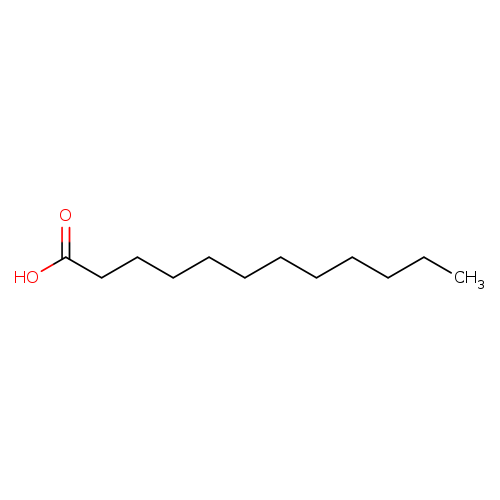
Dodecanoic acid, also known as dodecanoate or potassium laurate, belongs to the class of organic compounds known as medium-chain fatty acids. These are fatty acids with an aliphatic tail that contains between 4 and 12 carbon atoms. Dodecanoic acid exists as a solid, very hydrophobic, practically insoluble (in water), and relatively neutral molecule. Dodecanoic acid exists in all living species, ranging from bacteria to humans. Dodecanoic acid participates in a number of enzymatic reactions, within cattle. In particular, Dodecanoic acid and coenzyme A can be converted into lauroyl-CoA and L-carnitine; which is catalyzed by the enzyme carnitine O-palmitoyltransferase 2, mitochondrial. In addition, Dodecanoic acid can be converted into dodecanoic acid; which is catalyzed by the enzyme peroxisomal membrane protein 11C. In cattle, dodecanoic acid is involved in the metabolic pathway called the Beta oxidation OF very long chain fatty acids pathway. Dodecanoic acid is a potentially toxic compound.
belongs to the class of organic compounds known as medium-chain fatty acids. These are fatty acids with an aliphatic tail that contains between 4 and 12 carbon atoms.
Similarly, at the mid lactation stage, the prediction model was fitted for 28 milk metabolites and the model picked 5 of them (C12.1, PC aa C36:6, C6:1, valine and C12) with relatively lower R 2 (Model R 2 = 0.53, adjusted R 2 = 0.45, RMSE = 2.2 and LOOCV R 2 = 0.37) compared to the early stage of lactation.
Some aromatics, such as oxime-, methoxy-phenyl-, octadecanoic acid, furfural and dodecanoic acid, were the critical volatile compounds in raw milk of grazing.
Written in the paper as “dodecanoic acid” and “raw milk”
It is commonly believed that the consumption of C12:0, C14:0, and C16:0 acids has an adverse effect on the human body and is related to an increased number of low-density lipoproteins (LDLs) and the occurrence of atherosclerosis and coronary artery disease; however, the other saturated fatty acids (SFAs) found in milk have a neutralizing effect on these acids by increasing the concentration of high-density lipoproteins (HDLs) [36,37,38].
Among triacylglycerol-rich lipids, milk contained higher levels of cortisol than lauric acid, and the above studies suggest that cortisol is associated with fat metabolism [145].
Some medium and short-chain saturated fatty acids from milk fat, such as C4:0, C8:0, C10:0, and C12:0, have been found to have anticancer, antiviral, and antimicrobial properties, as well as the ability to retard tumor growth [3].
GC-MS analysis of the methylated fatty acids (FAs) showed the presence of 12:0, 14:0, 16:0, 16:1, 17:0, 18:0, 18:1, 18:2, 20:1, and 20:2 in all milk types, while FAs 19:0 and 20:4 were observed only in the dairy milk.
The top most significant QTLs were found to be associated with milk protein percentage, milk fat percentage, milk yield, milk lauric acid content, and lactation persistency (Fig. 5b).
Furthermore, the volatile fractions by HS-SPME of the RM samples (Table A2) were mainly represented by C10:0, C8:0, C6:0, and C12:0 fatty acids together with limonene, the C2:0 and C4:0 acids, isoamyl alcohol, 2-nonanone, benzoic acid, the C14:0 and C14:1 fatty acids, acetone, and pentanol.
Written in the paper as “C12:0 fatty acids” and “milk”
A total of 16 milk FAs were measure by gas chromatography [24], including C6:0, C8:0, C10:0, C11:0, C12:0, C13:0, C14:0, C14:1, C15:0, C16:0, C17:0, C17:1, C18:0, C18:1cis 9, and C20:0.
Odd-carbon-number TG species TG 33:0, TG 35:0, TG 37:0, TG 37:1, TG 39:0, and TG 39:1 in ruminants (cow, goat, and sheep) are composed mainly of SCFAs and MCFAs 4:0, 10:0, and 12:0, as well as some LCFAs.
Phosphatidylethanolamine was negatively correlated with the milk fatty acid proportion of C12:0, SFA, and ECSFA, and was positively correlated with the milk fatty acid proportion of C18:2n6c, C18:3n3, and UFA (P < 0.05).
A meta-analysis [82] concluded that milk fatty acid concentrations of C10:0, C12:0, C14:0-iso, C14:0, cis-9 C14:1, C15:0, and C16:0 were positively related to methane yield per unit of milk, while C4:0, C18:0, trans-10 + 11 C18:1, cis-9 C18:1, cis-11 C18:1, and cis-9,12 C18:2 in milk fat were negatively related.
For instance, we observed a high association between the 12:0 content in milk and the regulation of mitogen-activated protein kinase (MAPK) activity, e.g., MAPK cascade (q = 7.73E-06), MAPK signalling pathway (q = 0.00046), positive regulation of extracellular signal-regulated kinase (ERK) 1 and ERK2 cascade (q = 0.00017), and positive regulation of protein phosphorylation (q = 8.70E-06; Fig. 2a).
Coefficients of determination in external validation were good (>0.88) for SFA, MUFA, UFA, TFA, C6:0, C8:0, C10:0, C12:0, C14:0, C16:0 and C18:1 c9 in oven-dried milk, approximate for PUFA, C18:0, vaccenic (VA; C18:1 t11) and RA, and poor for linoleic acid (LA; C18:2 n-6), alfa-linolenic (ALA; C18:3 n-3) acid, PUFA n-6, and PUFA n-3.
The SFAs that play the greatest role in a negative view of milk fat (i.e., C12:0, C14:0, and C16:0), have often been associated with having adverse effects on indicators of cardiovascular risk (e.g., low-density lipoprotein cholesterol level in serum [191]).
The additive, dominance, and allele substitution effects of the nine SNPs were significantly associated with 19 milk FAs (C6:0, C8:0, C10:0, C12:0, C14:0, C14:1, C16:1, C17:0, C17:1, C18:0, C18:1cis-9, C20:0, C14index, C16index, C17index, SFA, UFA, SFA/UFA, and total index; p < 5.00 x 10 2).
Coefficients of variation (CV) were highest for C14:1 cis-9, C16:1 cis-9, and C12:0, i.e. 33.97, 27.24, and 24.19 , respectively, and lowest for C16:0, C18:2n6, and C6:0 i.e. 10.92, 12.95, and 14.30 , respectively.
Polyunsaturated fatty acids such as conjugated and non-conjugated linoleic acid (C18:2) contained in milk fat play a beneficial role in lowering blood lipids, suppressing immune responses, and stimulating lipid metabolism3; while high concentrations of saturated fatty acids such as myristic acid (C14:0), lauric acid (C12:0) and palmitic acid (C16:0) increase the concentration of low density lipoproteins in the blood, which is associated with cardiovascular disease4.
Volatile acidic compounds, such as hexanoic acid, hexadecanoic acid, lauric acid, octanoic acid, n-decanoic acid, tricosanoic acid, tetradecanoic acid, and hypogeic acid were found in milk samples, and these impart good flavor to the milk.
Lauric acid, as the primary MCFA content, and chitin both exert antimicrobial and microbiota-modulating effects in the rumen, as supported by prior studies demonstrating that BSF-derived MCFA and chitin selectively decreased butyrate-related taxa and overall rumen microbial communities, resulting in partial shift of VFA production [31,59].
Six of the feed efficiency-associated metabolites, including lactic acid, 5-aminovaleric acid, 2,4-diaminobutyric acid, lauric acid, 4-hydroxybutyrate, and 2-hydroxyvaleric acid, were selected by the random forest model, with an MDA > 4 (Fig. 5A).
The results shown in Table 2 indicate that short and medium chain fatty acids (C6:0 to C12:0), such as hexanoic (0.746 ), octanoic (0.605 ), decanoic (1.509 ), and lauric (1.818 ), are primarily synthesized de novo in the bovine mammary gland [27].
Written in the paper as “C12:0” and “mammary gland”
Most milk C12:0 and C14:0 is endogenously synthesized by the mammary gland using acetate and butyrate as substrates,48 but dietary effects on their milk concentrations may not be as extensive as for longer chain FA.49
Written in the paper as “C12:0” and “mammary gland”
Additionally, Villeneuve et al. [38] determined that Canadian RM volatiles were represented by fatty acids (C10:0, C6:0, C8:0, C12:0, and C2:0), followed by methyl alkyl ketones (acetone, 2-butanone, 2-heptanone, etc.), aliphatic and aromatic aldehydes, aliphatic esters (methyl- and ethyl-), lactones (d- and g-), terpenes (a-pinene and limonene), and alcohols.
Written in the paper as “C12:0” and “raw cow’s milk”
In contrast, Vagenas and Roussis [54] indicated that the volatile fraction of Greek RM (by HS-SPME) was composed of fatty acids (C8:0, C6:0, C10:0, C4:0, and C12:0) as major constituents and methyl alkyl ketones and lactones as minor components.
Written in the paper as “C12:0” and “raw cow’s milk”
Associated with
Amacrine Cells
Interneuron of the vertebrate retina. They integrate, modulate, and interpose a temporal domain in the visual message presented to the retinal ganglion cells, with which they synapse in the inner plexiform layer. They lack large axons.
Cyanobacteria and Lactobacillus_iners in feces were positively correlated with plasma differential metabolites from linoleic acid metabolism pathway, including 9-hydroxy-10,12-octadecadienoic acid, monolinolein and alpha-linolenic acid, and arachidonic acid metabolism pathway, involving 13,14-dihydro PGF1a, 5,6-dehydro arachidonic acid, as well as metabolites related to fatty acid metabolism, such as myristic acid, 12-hydroxydodecanoic acid, 12-hydroxyoctadecanoic acid, dodecanoic acid.
Written in the paper as “dodecanoic acid” and “plasma”
Additionally, we observed that excitatory neurons in the cerebral cortex and amacrine cells in the retina exhibited significant associations and high trait-relevant scores (TRS) for FY (P = 8.87 x 10 6), C10:0 (P = 8.75 x 10 6) and C12:0 (P = 1.59 x 10 2) compared to other cell types, underscoring the important roles of these two tissues in regulating milk fat content (Fig. 7d and Supplementary Fig. 19a-d).
Written in the paper as “C12:0” and “Excitatory neurons”
Only individual metabolites were found in other organs, such as the thyroid gland (dodecanoic acid), bladder (palmitic acid), platelet (palmitic acid), skeletal muscle (palmitic acid), kidney (palmitic acid), spleen (myristic acid), fibroblasts (palmitic acid), and liver (dodecanoic acid), respectively (Table 4).
Written in the paper as “dodecanoic acid” and “liver”
A positive correlation was observed between γ-HCH and C6:0 to C12:0, C14:0, C18:1t16, and ΣSFA in cow milk fat, and between this compound and C14:0iso, C16:1, C17:1, C18:1c9,11, and ΣMUFA in mare milk fat.
Metabolite sets were significantly enriched (p < 0.05) in epidermis with five metabolites (palmitic acid, caprylic acid, capric acid, dodecanoic acid, and myristic acid) and three metabolites in prostrate (palmitic acid, dodecanoic acid, and myristic acid) as the most significant set (Table 4).
Written in the paper as “dodecanoic acid” and “prostrate”
Furthermore, skeletal muscle cells (SMCs) showed a significant association with C12:0 (P = 9.14 x 10 20; Fig. 7b), which is consistent with their pivotal role in fatty acid use and intracellular fatty acid homeostasis43.
Written in the paper as “C12:0” and “skeletal muscle cells”
Metabolite sets were significantly enriched (p < 0.05) in epidermis with five metabolites (palmitic acid, caprylic acid, capric acid, dodecanoic acid, and myristic acid) and three metabolites in prostrate (palmitic acid, dodecanoic acid, and myristic acid) as the most significant set (Table 4).
Written in the paper as “dodecanoic acid” and “epidermis”
Only individual metabolites were found in other organs, such as the thyroid gland (dodecanoic acid), bladder (palmitic acid), platelet (palmitic acid), skeletal muscle (palmitic acid), kidney (palmitic acid), spleen (myristic acid), fibroblasts (palmitic acid), and liver (dodecanoic acid), respectively (Table 4).
Written in the paper as “dodecanoic acid” and “thyroid gland”
However, in the udder desaturation of fatty acids like 12:0, 14:0, 16:0 and 18:0 take place, and the products being 12:1, 14:1, 16:1 and 18:1, respectively.
Observing the predictive saturated fatty acids that had an AUC > 70 , such as C12:0 (CE, AUC = 0.738) and C14:0 (TG, AUC = 0.701), it was evident that there was a decrease in plasmatic concentration from healthy (3.133 mg/dL and 0.409 mg/dL) to hyperketonemic cows (1.736 mg/dL and 0.167 mg/dL).
Written in the paper as “C12:0” and “hyperketonemia”
Lauric acid is best known to exert antimicrobial properties that can inhibit the growth of gram-positive bacteria, such as Streptococcus bovis and Clostridium spp., which are often associated with inefficient fermentation and lactic acidosis [10, 11].
Written in the paper as “lauric acid” and “lactic acidosis”
An overnutrition that is characterized by excess body fat, traditionally defined as an elevated ratio of weight to height (specifically 30 kilograms per meter squared), has_material_basis_in a multifactorial etiology related to excess nutrition intake, decreased caloric utilization, and genetic susceptibility, and possibly medications and certain disorders of metabolism, endocrine function, and mental illness.
The C12:0, C13:0, C15:0, C16:0, C17:0, and C20:4n6 were higher, whereas C16:1 and C18:3n3 were lower in obese cows compared to normal cows (Fig. 2I and J; P < 0.05).
The chemical reactions and pathways resulting in the formation of a fatty acid, any of the aliphatic monocarboxylic acids that can be liberated by hydrolysis from naturally occurring fats and oils. Fatty acids are predominantly straight-chain acids of 4 to 24 carbon atoms, which may be saturated or unsaturated; branched fatty acids and hydroxy fatty acids also occur, and very long chain acids of over 30 carbons are found in waxes.
The enrichment network diagram is shown in Figure 2D, where key differential metabolites in the fatty acid biosynthesis signaling pathway include lauric acid, decanoic acid, myristic acid, oleic acid, hexadecanoic acid, and palmitic acid.
Written in the paper as “lauric acid” and “fatty acid biosynthesis”
Metabolite sets were significantly enriched in fatty acid biosynthesis pathway with five metabolites (hexadecanoic acid, tetradecanoic acid, dodecanoic acid, decanoic acid, and octanoic acid) and one metabolite (hexadecanoic acid) involved in the elongation/degradation of fatty acid (Table 3).
Written in the paper as “dodecanoic acid” and “fatty acid biosynthesis pathway”
The chemical reactions and pathways involving fatty acids, aliphatic monocarboxylic acids liberated from naturally occurring fats and oils by hydrolysis.
Cyanobacteria and Lactobacillus_iners in feces were positively correlated with plasma differential metabolites from linoleic acid metabolism pathway, including 9-hydroxy-10,12-octadecadienoic acid, monolinolein and alpha-linolenic acid, and arachidonic acid metabolism pathway, involving 13,14-dihydro PGF1a, 5,6-dehydro arachidonic acid, as well as metabolites related to fatty acid metabolism, such as myristic acid, 12-hydroxydodecanoic acid, 12-hydroxyoctadecanoic acid, dodecanoic acid.
Written in the paper as “dodecanoic acid” and “fatty acid metabolism”
Correlation analysis of metabolites and genes involved in fatty acid metabolism showed that myristic acid was significantly negatively correlated with ACOX3, ACACA, and FASN, while it was significantly positively correlated with PTPLAD2 and C7H5orf63; oleic acid was significantly negatively correlated with FASN, while it was significantly positively correlated with C7H5orf63 and THEM4; palmitic acid was significantly negatively correlated with ACOX3, ACACA, and FASN, while it was significantly positively correlated with PTPLAD2, C7H5orf63, and THEM4; hexadecanoic acid was significantly positively correlated with FASN and ACOX3, while it was significantly negatively correlated with C7H5orf63; lauric acid was significantly positively correlated with ACACA, while it was significantly negatively correlated with PTPLAD2, C7H5orf63, and THEM4; decanoic acid was significantly positively correlated with ACACA and FASN, while it was significantly negatively correlated with PTPLAD2, C7H5orf63, and THEM4 (Figure 5D).
Written in the paper as “lauric acid” and “fatty acid metabolism”
Actually, changes in the CE-based metabolomic profile highlighted that the b-oxidation of very long FAs is one of the representative postmortem metabolisms in JBR (Figure 7A), with the characteristic decrease in octanoate, decanoate, and dodecanoate, and increase in acetyl-CoA and carnitine (Table 2).
Written in the paper as “dodecanoate” and “b-oxidation of very long fatty acids”
Most milk C12:0 and C14:0 is endogenously synthesized by the mammary gland using acetate and butyrate as substrates,48 but dietary effects on their milk concentrations may not be as extensive as for longer chain FA.49
Written in the paper as “C12:0” and “endogenous synthesis by the mammary gland”
Lauric acid, one of the esterase cleavage products of GML, also has potent antimicrobial and anti-inflammatory properties, but these properties require nearly 400-fold more lauric acid than GML21.
Written in the paper as “Lauric acid” and “esterase cleavage”
The metabolic process that uses oxidation-reduction reactions of organic compounds and substrate-level phosphorylation for the generation of adenosine triphosphate (ATP), without consuming oxygen and is independent of electron transport chains.
The major fatty acids formed during fermentation in both milks were lauric acid (C12:0), myristic acid (C14:0), palmitic acid (C16:0), and oleic acid (C18:1), whereas stearic acid (C18:0) rose only in sheep milk, from 43.9 + 0.2 to 191.3 + 4.1 mg/g.
Written in the paper as “lauric acid” and “fermentation”
The immediate defensive reaction (by vertebrate tissue) to infection or injury caused by chemical or physical agents. The process is characterized by local vasodilation, extravasation of plasma into intercellular spaces and accumulation of white blood cells and macrophages.
The Toll-like receptor 4 (TLR4) is activated by saturated fatty acids, such as Oleic acid, Lauric acid, and Palmitic acid, which subsequently activate the host s innate defense system against the invading pathogens [22].
Written in the paper as “Lauric acid” and “innate defense system”
In addition to essential nutrients, BSF contains bioactive compounds, such as medium-chain fatty acids (MCFA), particularly lauric acid and myristic acid, as well as chitin, which are known for their functional roles in modulating rumen fermentation and microbial activity [8, 9].
Written in the paper as “lauric acid” and “microbial activity”
In addition to essential nutrients, BSF contains bioactive compounds, such as medium-chain fatty acids (MCFA), particularly lauric acid and myristic acid, as well as chitin, which are known for their functional roles in modulating rumen fermentation and microbial activity [8, 9].
Written in the paper as “lauric acid” and “rumen fermentation”
Overall, NaAc increased milk fat synthesis primarily through an increase in synthesis of de novo and mixed FA (C10:0, C12:0; C:14; C16:0), while CaBu, increased synthesis of C10:0 and C12:0 and modified FA of microbial origin, indicating a shift in rumen fermentation pattern (Vlaeminck et al., 2006).
Written in the paper as “C12:0” and “synthesis of de novo and mixed fatty acids”
The results shown in Table 2 indicate that short and medium chain fatty acids (C6:0 to C12:0), such as hexanoic (0.746 ), octanoic (0.605 ), decanoic (1.509 ), and lauric (1.818 ), are primarily synthesized de novo in the bovine mammary gland [27].
Written in the paper as “C12:0” and “synthesized de novo”
This is a short feeding period and a lower dose when compared with a 10-wk study supplementing cows with an alternating treatment of Agolin Ruminant at 0.17 g/kg DM and lauric acid at 65 g/kg of DM, where they observed a 20 decrease in CH4 production (Klop et al., 2017).
Written in the paper as “lauric acid” and “CH4 production”
However, some studies have shown that supplementation of glycerides of MCFAs (C8:0, C10:0, and C12:0) had no effects on the health and growth of calves [39], and even decreased DMI when supplementing coconut oil ( 75 MCFAs) [40] or lauric acid [41].
Written in the paper as “lauric acid” and “dry matter intake”
These doses were chosen to avoid reductions in DMI, which have been observed with cows fed lauric acid at a much higher dose (65 g/kg of DM; Klop et al., 2017).
Written in the paper as “lauric acid” and “dry matter intake”
For instance, BSF was reported to contain a higher lauric acid content than SBM (17.5 vs. 3.0 ), and lauric acid has been reported to decrease DMI in other studies [43, 44].
Written in the paper as “lauric acid” and “dry matter intake”
Moreover, these fatty acids, specifically lauric and myristic acids, suppress methanogenesis, thereby reducing greenhouse gas emissions and enhancing nutrient utilization and feed efficiency in ruminants.
Written in the paper as “lauric acid” and “feed efficiency”
Six of the feed efficiency-associated metabolites, including lactic acid, 5-aminovaleric acid, 2,4-diaminobutyric acid, lauric acid, 4-hydroxybutyrate, and 2-hydroxyvaleric acid, were selected by the random forest model, with an MDA > 4 (Fig. 5A).
Written in the paper as “lauric acid” and “feed efficiency”
The reduction of methane emissions has also been associated to lauric (C12:0), myristic (C14:0) and linoleic (C18:2n6) acids in the review performed by Toprak et al.59.
Written in the paper as “lauric acid” and “methane emissions”
A meta-analysis [82] concluded that milk fatty acid concentrations of C10:0, C12:0, C14:0-iso, C14:0, cis-9 C14:1, C15:0, and C16:0 were positively related to methane yield per unit of milk, while C4:0, C18:0, trans-10 + 11 C18:1, cis-9 C18:1, cis-11 C18:1, and cis-9,12 C18:2 in milk fat were negatively related.
Written in the paper as “C12:0” and “methane yield per unit of milk”
Compared to L-MF cows, H-MF cows exhibited elevated ruminal FAs (e.g., lauric acid) and plasma BHB, alongside increased milk L-carnitine, suggesting enhanced lipogenic substrate availability to the mammary glands and the FA b-oxidation capacity in the whole body.
Written in the paper as “lauric acid” and “milk fat content”
The HS group exhibited higher proportions of saturated fatty acids, such as C14:0 (P = 0.012) and C16:0 (P = 0.024), while the proportions of C4:0 (P = 0.043) and C12:0 (P = 0.019) were also affected.
Written in the paper as “C12:0” and “milk fatty acid composition”
Similarly, at the mid lactation stage, the prediction model was fitted for 28 milk metabolites and the model picked 5 of them (C12.1, PC aa C36:6, C6:1, valine and C12) with relatively lower R 2 (Model R 2 = 0.53, adjusted R 2 = 0.45, RMSE = 2.2 and LOOCV R 2 = 0.37) compared to the early stage of lactation.
Written in the paper as “C12.1” and “residual feed intake”
This in silico analysis demonstrated that TAG species in the three concentrates primarily featured saturated and monounsaturated long-chain FAs (e.g., 16:0, 18:1, 14:0, 18:0) as well as saturated short- and medium-chain FAs (e.g., 4:0, 6:0, 8:0, 10:0, 12:0).
Furthermore, enhanced the levels of metabolites such as lauric acid, trans-cinnamic acid, and N4-acetylcytidine, while simultaneously reducing the concentrations of trans-aconitic acid, 1,2,3-cyclopropanetricarboxylic acid, and Lysops 22:5.
Non-defatted BSF generally contains substantially higher fat levels, particularly medium-chain fatty acids such as lauric acid [1, 2], which may negatively affect rumen fermentation (e.g., suppress fiber-degrading bacteria) and reduce palatability when included at higher dietary concentrations.
Written in the paper as “lauric acid” and “non-defatted black soldier fly”
An edible plant oil derived from the kernel of the oil palm Elaeis guineensis. It should not be confused with the other two edible oils derived from palm fruits: palm oil, and coconut oil.
For instance, BSF was reported to contain a higher lauric acid content than SBM (17.5 vs. 3.0 ), and lauric acid has been reported to decrease DMI in other studies [43, 44].
Written in the paper as “lauric acid” and “soybean meal”
When compared to the CC treatment, supplementation of SO and LO decreased the content of the following FAs: C6:0, C8:00, C10:0, C12:0, C14:0, and C16:0 (p < 0.01).
Written in the paper as “C12:0” and “vegetable oil”
These findings suggest that curcumin may contribute to the maintenance of granulosa cells at least in part by modulating the levels of bioactive metabolites such as quercetagetin derivatives and lauric acid, which are known for their antioxidant and anti-inflammatory properties.
Written in the paper as “lauric acid” and “anti-inflammatory”
Lauric acid is known to have antibacterial and antiviral activities [67], while palmitic acid was found to be able to inhibit mutagenesis in a dose-dependent response in bacterial cells in vitro [68].
Written in the paper as “lauric acid” and “antibacterial”
Lauric acid is known to have antibacterial and antiviral activities [67], while palmitic acid was found to be able to inhibit mutagenesis in a dose-dependent response in bacterial cells in vitro [68].
Written in the paper as “lauric acid” and “antiviral”
These findings suggest that curcumin may contribute to the maintenance of granulosa cells at least in part by modulating the levels of bioactive metabolites such as quercetagetin derivatives and lauric acid, which are known for their antioxidant and anti-inflammatory properties.
Written in the paper as “lauric acid” and “antioxidant”
Pathways
Name
SMPDB/Pathwhiz
KEGG
Fatty Acid Biosynthesis
Not Available
Beta Oxidation of Very Long Chain Fatty Acids
Not Available
Mitochondrial Beta-Oxidation of Medium Chain Saturated Fatty Acids
Stepanova, G. A.; Markevich, V. S.; Garanin, V. I.; Stychinskii, G. F. Synthesis of lauric acid. Khimicheskaya Promyshlennost (Moscow, Russian Federation) (1974), (12), 930.
Jensen RG: The composition of bovine milk lipids: January 1995 to December 2000. J Dairy Sci. 2002 Feb;85(2):295-350. doi: 10.3168/jds.S0022-0302(02)74079-4. [PubMed:11913692 ]
Jensen RG, Ferris AM, Lammi-Keefe CJ: The composition of milk fat. J Dairy Sci. 1991 Sep;74(9):3228-43. doi: 10.3168/jds.S0022-0302(91)78509-3. [PubMed:1779072 ]
Colman E, Fokkink WB, Craninx M, Newbold JR, De Baets B, Fievez V: Effect of induction of subacute ruminal acidosis on milk fat profile and rumen parameters. J Dairy Sci. 2010 Oct;93(10):4759-73. doi: 10.3168/jds.2010-3158. [PubMed:20855010 ]
Keenan TW, Morre DJ, Olson DE, Yunghans WN, Patton S: Biochemical and morphological comparison of plasma membrane and milk fat globule membrane from bovine mammary gland. J Cell Biol. 1970 Jan;44(1):80-93. [PubMed:5409465 ]
Trimigno A, Munger L, Picone G, Freiburghaus C, Pimentel G, Vionnet N, Pralong F, Capozzi F, Badertscher R, Vergeres G: GC-MS Based Metabolomics and NMR Spectroscopy Investigation of Food Intake Biomarkers for Milk and Cheese in Serum of Healthy Humans. Metabolites. 2018 Mar 23;8(2). pii: metabo8020026. doi: 10.3390/metabo8020026. [PubMed:29570652 ]
van Gastelen S, Antunes-Fernandes EC, Hettinga KA, Dijkstra J: Relationships between methane emission of Holstein Friesian dairy cows and fatty acids, volatile metabolites and non-volatile metabolites in milk. Animal. 2017 Sep;11(9):1539-1548. doi: 10.1017/S1751731117000295. Epub 2017 Feb 21. [PubMed:28219465 ]
Kurt J. Boudonck, Matthew W. Mitchell, Jacob Wulff and John A. Ryals (2009). Kurt J. Boudonck, Matthew W. Mitchell, Jacob Wulff and John A. Ryals. Characterization of the biochemical variability of bovine milk using metabolomics. Metabolomics (2009) 5:375?386. Metabolomics.
M. Ferrand, B. Huquet. S. Barbey, F. Barillet, F. Faucon, H. Larroque, O. Leray, J.M. Trommenschlager, M. Brochard (2011). M. Ferrand et al. Determination of fatty acid profile in cow's milk using mid-infrared spectrometry: Interest of applying a variable selection by genetic algorithms before a PLS regression. Chemometrics and Intelligent Laboratory Systems 106 (2011) 183?189. Chemometrics and Intelligent Laboratory Systems.
Lawrence K. Creamer, Alastair K.H. MacGibbon (1996). Lawrence K. Creamer, Alastair K.H. MacGibbon. Some recent advances in the basic chemistry of milk proteins and lipids. International Dairy J. (1996) 6(6):539-568 doi: 10.1016/0958-6946(96)85309-X. International Dairy Journal.
M.J. Abarghuei, Y. Rouzbehan, A.Z.M Salem, M.J. Zamiri (2014). M.J. Abarghuei, Y. Rouzbehan, A.Z.M Salem, M.J. Zamiri. Nitrogen balance, blood metabolites and milk fatty acid composition of dairy cows fed pomegranate-peel extract. Livestock Science (2014) 164:72-80 doi: 10.1016/j.livsci.2014.03.021. Livestock Science.
Fooddata+, The Technical University of Denmark (DTU) [Link]
Secondary metabolites biosynthesis, transport and catabolism
Specific function:
Fatty acid synthetase catalyzes the formation of long-chain fatty acids from acetyl-CoA, malonyl-CoA and NADPH. This multifunctional protein has 7 catalytic activities as an acyl carrier protein.
Catalyzes the activation of fatty acids by CoA to produce an acyl-CoA, the first step in fatty acid metabolism (PubMed:11382754, PubMed:10561077). Capable of activating medium-chain fatty acids (e.g. butyric (C4) to decanoic (C10) acids), and certain carboxylate-containing xenobiotics, e.g. benzoate (PubMed:10561077, PubMed:11382754). Also catalyzes the activation of lipoate to lipoyl-nucleoside monophosphate (PubMed:11382754). Activates lipoate with GTP at a 1000-fold higher rate than with ATP and activates both (R)- and (S)-lipoate to the respective lipoyl-GMP, with a preference for (R)-lipoate (PubMed:11382754).
Receptor for medium-chain free fatty acid (FFA) with carbon chain lengths of C9 to C14. Capric acid (C10:0), undecanoic acid (C11:0) and lauric acid (C12:0) are the most potent agonists. Not activated by short-chain and long-chain saturated and unsaturated FFAs. Activation by medium-chain free fatty acid is coupled to a pertussis toxin sensitive G(i/o) protein pathway. May have important roles in processes from fatty acid metabolism to regulation of the immune system (By similarity).