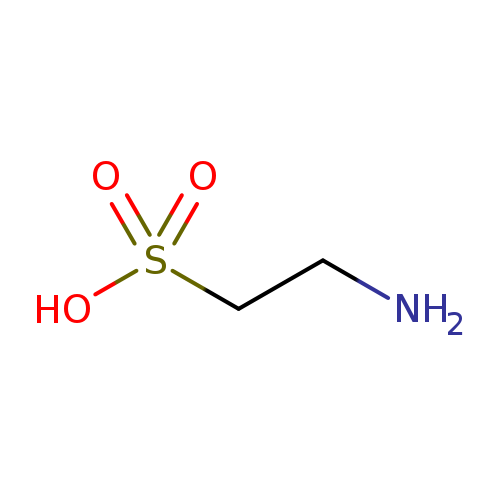
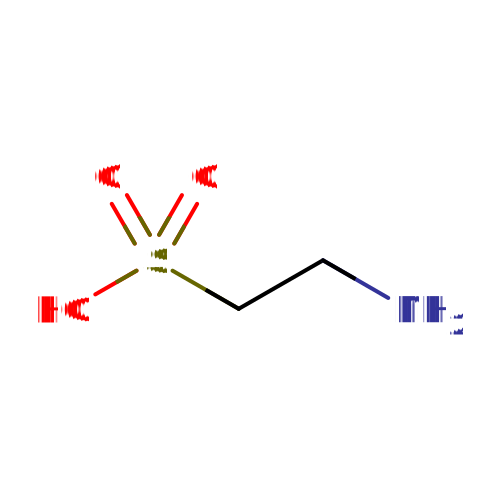
Taurine, also known as taufon or 2-sulfoethylamine, belongs to the class of organic compounds known as organosulfonic acids. Organosulfonic acids are compounds containing the sulfonic acid group, which has the general structure RS(=O)2OH (R is not a hydrogen atom). Taurine exists as a solid, possibly soluble (in water), and a very strong basic compound (based on its pKa) molecule. Taurine exists in all living species, ranging from bacteria to humans. Taurine is a potentially toxic compound. Taurine has been found to be associated with several diseases known as perillyl alcohol administration for cancer treatment, schizophrenia, irritable bowel syndrome, and sulfite oxidase deficiency, isolated; also taurine has been linked to the inborn metabolic disorders including maple syrup urine disease.
belongs to the class of organic compounds known as organosulfonic acids. Organosulfonic acids are compounds containing the sulfonic acid group, which has the general structure RS(=O)2OH (R is not a hydrogen atom).
Fat tissue. Stores energy as triglycerides and releases fatty acids and hormones; in cattle it lies under the skin, around organs and as marbling within muscle.
The relationship between plasma taurine level and other blood or rumen parameters was assessed by Spearman s correlation analysis across the fattening phases.
We found significant metabolites in both supervised analyses (p < 0.05 and VIP score > 1) for cows (Taurine, Glutamic acid, Histidine, and PC aa C42:2) and for calves (Carnosine, Alanine, and PC aa C26:0).
Overall, 913 metabolites were identified across the four biofluids (i.e, rumen liquid, plasma, milk, and urine) of dairy cows in this study, amongst which a total of 79 metabolites were shared by all the four biofluids, including benzoic acid, taurine, and L-phenylalanine (Figure 1).
Pairwise network analysis was used to investigate the interactions among milk metabolites, lipids, and proteins across different animal species (Fig. 4C, 5C, 6C).
The concentration of taurine is high in breast milk (about 18 mg/l) and in colostrum from cow, but in regular bovine milk it is not high; about 1 mg/l [110].
Sheep milk also possesses taurine in concentrations (140 umol/L) closest to that of human milk (300 umol/L), with mare (30 umol/L) and cow (10 umol/L) milk proving inferior sources [22,70,181].
Overall, 913 metabolites were identified across the four biofluids (i.e, rumen liquid, plasma, milk, and urine) of dairy cows in this study, amongst which a total of 79 metabolites were shared by all the four biofluids, including benzoic acid, taurine, and L-phenylalanine (Figure 1).
Taurine, biosynthesized from methionine or cysteine in the liver, plays a crucial regulatory role in bile acid conjugation, antioxidant effects, and glucose and cholesterol metabolism.
Besides, supplemental RPM has been proved to alter hepatic gene expressions in the methionine cycle of transition cows, boosting productions of antioxidants such as glutathione and taurine [61].
The taurine from the hindgut combined with this indicates that microbial metabolites from the rumen and hindgut may be absorbed and influence the host s serum metabolic profile, thereby regulating growth and metabolism.
This increase could not be attributed to differences in feed intake but was positively correlated with endogenous precursors such as ribitol from microbial metabolism in the rumen and taurine from hindgut microbial metabolism, suggesting that microbial activity may influence the host's nitrogen metabolism network.
Fat tissue. Stores energy as triglycerides and releases fatty acids and hormones; in cattle it lies under the skin, around organs and as marbling within muscle.
The concentration of taurine is high in breast milk (about 18 mg/l) and in colostrum from cow, but in regular bovine milk it is not high; about 1 mg/l [110].
Interestingly, the total area under the H.E.A.T. curve was positively related to the abundance of six metabolites in the follicular fluid of Estrous Inactive but not in Estrous Active heifers (taurodeoxycholate, taurine, 2-oxo-4-methylthiobutanoate, homoserine/threonine, citrulline and tryptophan; Table 8).
Written in the paper as “taurine” and “follicular fluid”
Although taurine is not usually a quantitatively important nutrient in the diet of ruminants [45], its concentration was very high in the intestine of dairy cows.
Overall, 913 metabolites were identified across the four biofluids (i.e, rumen liquid, plasma, milk, and urine) of dairy cows in this study, amongst which a total of 79 metabolites were shared by all the four biofluids, including benzoic acid, taurine, and L-phenylalanine (Figure 1).
Written in the paper as “taurine” and “rumen liquid”
Methionine and cysteine metabolism was significant, and the observed metabolites were taurine and hypotaurine, which plays a significant role in maintaining sperm motility, capacitation and the acrosome reaction57.
However, in earlier studies, other fertility markers were identified in bovine fresh seminal plasma, such as 2-oxoglutaric acid and fructose [21], or citrate, taurine, isoleucine and leucine [15].
Written in the paper as “taurine” and “seminal plasma”
Overall, 913 metabolites were identified across the four biofluids (i.e, rumen liquid, plasma, milk, and urine) of dairy cows in this study, amongst which a total of 79 metabolites were shared by all the four biofluids, including benzoic acid, taurine, and L-phenylalanine (Figure 1).
In addition, cows experiencing higher rumen acidosis had major alterations in the serum concentrations of amino acids and amino acid related compounds such as trans-4-hydroxyproline and cis-4-hydroxyproline, taurine, ornithine, cystine, homoarginine, and 5-aminovaleric acid.
Written in the paper as “taurine” and “rumen acidosis”
Glycine and serine were previously shown to decrease during bouts of rumen acidosis, whereas biogenic amines carnosine and taurine increased (Humer et al. 2018a, b).
Written in the paper as “taurine” and “rumen acidosis”
Moreover, research suggested association between the TauT gene (Taurine Transporter) in Holstein-Friesian cattle and bTB susceptibility (90), its presence leads to taurine deficiency and ultimately affecting immune system (91).
Written in the paper as “taurine” and “BackgroundBovine tuberculosis”
It helps prevent liver steatosis through the inhibition of lipogenesis and promotion of energy expenditure, and it also mitigates oxidative damage by reducing ROS levels and stabilizing the mitochondrial membrane [54].
Written in the paper as “taurine” and “liver steatosis”
In group B compared with group A at 70 days postpartum, there was an increase in the milk whey of six different metabolites including succinate, creatine phosphate, glycine, myo-inositol, glycolate, and orotate and a decrease in the milk whey of seven metabolites, including alanine, creatinine, o-phosphorylcholine, lactose, taurine, galactose, and glucose-1-phosphate.
Written in the paper as “taurine” and “Inactive ovaries”
Other metabolites being upregulated in cows not developing metritis were taurine and hypotaurine; both are antioxidant sulfur-containing amino acids that improve the immune function due to anti-apoptotic activities, antioxidant stress effects, and the regulation of mitochondrial function [36,37]
Taurine, biosynthesized from methionine or cysteine in the liver, plays a crucial regulatory role in bile acid conjugation, antioxidant effects, and glucose and cholesterol metabolism.
Written in the paper as “Taurine” and “bile acid conjugation”
Taurine contributes to antioxidant defense, bile acid conjugation, and osmoregulation in ruminants, with positive effects on mammary and hepatic function [53].
Written in the paper as “taurine” and “bile acid conjugation”
It is implicated in numerous biological and physiological functions: bile acid conjugation and cholestasis prevention, antiarrhythmic/inotropic/chronotropic effects, central nervous system neuromodulation, retinal development and function, endocrine/metabolic effects and antioxidant/anti-inflammatory properties [111].
Written in the paper as “Taurine” and “bile acid conjugation”
The chemical reactions and pathways involving taurine (2-aminoethanesulfonic acid), a sulphur-containing amino acid derivative important in the metabolism of fats.
Formamide catalyzes the generation of L-glutamate through nitrogen metabolism (ko00910), whereas taurine, which was enriched in the LRFI group, promotes L-glutamate production through taurine and hypotaurine metabolism (ko00430).
Written in the paper as “taurine” and “taurine and hypotaurine metabolism”
Specifically, taurine, generated through taurine and hypotaurine metabolism, was significantly enriched in the hindgut of the LRFI group (Fig. S4C; VIP > 1; corrected P < 0.05).
Written in the paper as “taurine” and “taurine and hypotaurine metabolism”
In particular, milk protein, fat, and carbohydrate aim to conform to 1:2:4 proportions; polyunsaturated 18-carbon fatty acid with two unsaturated sites, like linoleic omega 6 acid, to 2-3 of total energy, and casein to whey ratio at 40:60. Minerals and vitamins are fortified as needed, osmolarity adjusted to 270 milliosmoles per liter to support infant s kidney function, and bioactive ingredients, such as omega 3 and essential fatty acids, carnitine, taurine, polyamines, nucleotides, oligosaccharides, folates, prebiotics, and probiotics, are supplemented to approximate human milk, or to the results of studies indicating their benefits to infant growth and development [13].
Written in the paper as “taurine” and “infant growth and development”
The immediate defensive reaction (by vertebrate tissue) to infection or injury caused by chemical or physical agents. The process is characterized by local vasodilation, extravasation of plasma into intercellular spaces and accumulation of white blood cells and macrophages.
Previous studies have shown that taurine supplementation promotes milk fat and protein synthesis and alleviates oxidative stress and inflammation in bovine mammary epithelial cells (20, 21).
Written in the paper as “Taurine” and “inflammation”
It is involved in many biological processes, including anti-inflammatory, antioxidant activities, bile acid binding, membrane stabilization, osmoregulation, regulation of cellular calcium flux, and immunomodulation (17, 18).
Written in the paper as “Taurine” and “osmoregulation”
Taurine contributes to antioxidant defense, bile acid conjugation, and osmoregulation in ruminants, with positive effects on mammary and hepatic function [53].
Written in the paper as “taurine” and “osmoregulation”
The chemical reactions and pathways resulting in the formation of taurine (2-aminoethanesulfonic acid), a sulphur-containing amino acid derivative important in the metabolism of fats.
Other physiological changes from other primates point to TASF nutrition (intake, absorption, and metabolism), including the lost capacity to absorb vitamin B12 derived from gut bacteria [21]; preferential absorption of heme iron versus non-heme iron [22,23]; greater dependency on dietary choline [21,24]; reduced capacity to produce taurine from amino acid precursors [25,26]; and lowered levels of alpha-linolenic acid conversion into eicosapentaenoic acid (EPA)/docosahexaenoic (DHA) [27].
Written in the paper as “taurine” and “produce taurine”
Taurine, biosynthesized from methionine or cysteine in the liver, plays a crucial regulatory role in bile acid conjugation, antioxidant effects, and glucose and cholesterol metabolism.
Written in the paper as “Taurine” and “taurine synthesis”
The chemical reactions and pathways involving purine nucleobases, one of the two classes of nitrogen-containing ring compounds found in DNA and RNA, which include adenine and guanine.
In this experiment, 8 and 32 mmol/L taurine inhibited purine metabolism by significantly down-regulating the production of ATP, ADP, UTP, UDP and hypoxanthine in mammary epithelial cells of cows at high temperature.
Written in the paper as “taurine” and “purine metabolism”
In conclusion, taurine affected the metabolic pathways: purine metabolism, amino acid metabolism, glucose metabolism, fatty acid metabolism and biosynthesis in bovine mammary epithelial cells under high temperature condition.
Written in the paper as “taurine” and “purine metabolism”
In conclusion, taurine affected the metabolic pathways: purine metabolism, amino acid metabolism, glucose metabolism, fatty acid metabolism and biosynthesis in bovine mammary epithelial cells under high temperature condition.
Written in the paper as “taurine” and “amino acid metabolism”
Involved in
antioxidant activities
Inhibition of the reactions brought about by dioxygen (O2) or peroxides. Usually the antioxidant is effective because it can itself be more easily oxidized than the substance protected. The term is often applied to components that can trap free radicals, thereby breaking the chain reaction that normally leads to extensive biological damage.
It is involved in many biological processes, including anti-inflammatory, antioxidant activities, bile acid binding, membrane stabilization, osmoregulation, regulation of cellular calcium flux, and immunomodulation (17, 18).
Written in the paper as “Taurine” and “antioxidant activities”
Taurine contributes to antioxidant defense, bile acid conjugation, and osmoregulation in ruminants, with positive effects on mammary and hepatic function [53].
Written in the paper as “taurine” and “antioxidant defense”
Its physiological roles include bile acid conjugation (Garbutt et al., 1971), osmotic balance (Hussy et al., 2000), antioxidative activity (Thirupathi et al., 2018), glucose modulation (Murakami et al., 2022), and cholesterol metabolism (Chen et al., 2012).
Written in the paper as “Taurine” and “antioxidative activity”
A programmed cell death process which begins when a cell receives an internal (e.g. DNA damage) or external signal (e.g. an extracellular death ligand), and proceeds through a series of biochemical events (signaling pathway phase) which trigger an execution phase. The execution phase is the last step of an apoptotic process, and is typically characterized by rounding-up of the cell, retraction of pseudopodes, reduction of cellular volume (pyknosis), chromatin condensation, nuclear fragmentation (karyorrhexis), plasma membrane blebbing and fragmentation of the cell into apoptotic bodies. When the execution phase is completed, the cell has died.
The cellular catabolic process in which cells digest cellular materials, such as organelles and other macromolecular constituents, or non-self materials such as intracellular pathogens. Autophagy serves to provide essential nutrients under conditions of cellular stress; or can remodel intracellular structures during cell differentiation.
Moreover, taurine can reduce cellular autophagy by inhibiting the PI3K pathway and inhibiting the mTOR pathway through down-regulation of adenosine monophosphate (AMP) expression.
Written in the paper as “taurine” and “autophagy”
Involved in
bile acid binding
Binding to a bile acid, a steroid carboxylic acids occurring in bile.
It is involved in many biological processes, including anti-inflammatory, antioxidant activities, bile acid binding, membrane stabilization, osmoregulation, regulation of cellular calcium flux, and immunomodulation (17, 18).
Written in the paper as “Taurine” and “bile acid binding”
Moreover, we explored the metabolic pathways responsible for bile acid synthesis in the liver with special emphasis on the essential role of taurine in this process.
Written in the paper as “taurine” and “bile acid synthesis”
The process whose specific outcome is the progression of the central nervous system over time, from its formation to the mature structure. The central nervous system is the core nervous system that serves an integrating and coordinating function. In vertebrates it consists of the brain and spinal cord. In those invertebrates with a central nervous system it typically consists of a brain, cerebral ganglia and a nerve cord.
Choline is vital for brain development and function, taurine supports the development of the central nervous system, and lutein is an antioxidant that contributes to eye health.
Written in the paper as “taurine” and “development of the central nervous system”
It is implicated in numerous biological and physiological functions: bile acid conjugation and cholestasis prevention, antiarrhythmic/inotropic/chronotropic effects, central nervous system neuromodulation, retinal development and function, endocrine/metabolic effects and antioxidant/anti-inflammatory properties [111].
Written in the paper as “Taurine” and “central nervous system neuromodulation”
It is implicated in numerous biological and physiological functions: bile acid conjugation and cholestasis prevention, antiarrhythmic/inotropic/chronotropic effects, central nervous system neuromodulation, retinal development and function, endocrine/metabolic effects and antioxidant/anti-inflammatory properties [111].
Written in the paper as “Taurine” and “cholestasis prevention”
The chemical reactions and pathways resulting in the breakdown of cholesterol, cholest-5-en-3 beta-ol, the principal sterol of vertebrates and the precursor of many steroids, including bile acids and steroid hormones.
The chemical reactions and pathways involving cholesterol, cholest-5-en-3 beta-ol, the principal sterol of vertebrates and the precursor of many steroids, including bile acids and steroid hormones. It is a component of the plasma membrane lipid bilayer and of plasma lipoproteins and can be found in all animal tissues.
Its physiological roles include bile acid conjugation (Garbutt et al., 1971), osmotic balance (Hussy et al., 2000), antioxidative activity (Thirupathi et al., 2018), glucose modulation (Murakami et al., 2022), and cholesterol metabolism (Chen et al., 2012).
Written in the paper as “Taurine” and “cholesterol metabolism”
Contrastingly, in herbivores, including cattle, taurine is naturally generated from sulfur-containing amino acids, such as methionine and cysteine, via the cysteine-sulfinic acid pathway (Spitze et al., 2003; Wang et al., 2016).
Written in the paper as “taurine” and “cysteine-sulfinic acid pathway”
Downregulates
cytokine production involved in inflammatory response GO:0002534
The synthesis or release of a cytokine following a inflammatory stimulus as part of an inflammatory response, resulting in an increase in its intracellular or extracellular levels.
It promotes fat absorption, prevents retinal degeneration, and recent studies show that taurine supplementation can restore Nr1d1 expression, enhance epithelial barrier integrity, and reduce the production of pro-inflammatory cytokines (Bakshi et al., 2023; Wang, Zhou, et al., 2025).
Written in the paper as “taurine” and “production of pro-inflammatory cytokines”
In addition, taurine can also have a positive impact on infant development, as it has been shown to play an important role in trophoblast turnover and cytoprotection in the human embryo (Holm, Kristiansen, Michelsen, 2018).
Written in the paper as “Taurine” and “cytoprotection”
Consumed by
deconjugation of glycine and taurine residues from cholesterol
Moreover, strains with probiotic potential must exhibit bile salt tolerance, such as the expression of bile salt hydrolase (BSH), which catalyzes the deconjugation of glycine and taurine residues from cholesterol [31] and has been definitively linked to the tolerance of a number of Lactobacilli species exposed to bile salts [30].
Written in the paper as “taurine” and “deconjugation of glycine and taurine residues from cholesterol”
It helps prevent liver steatosis through the inhibition of lipogenesis and promotion of energy expenditure, and it also mitigates oxidative damage by reducing ROS levels and stabilizing the mitochondrial membrane [54].
Written in the paper as “taurine” and “energy expenditure”
It promotes fat absorption, prevents retinal degeneration, and recent studies show that taurine supplementation can restore Nr1d1 expression, enhance epithelial barrier integrity, and reduce the production of pro-inflammatory cytokines (Bakshi et al., 2023; Wang, Zhou, et al., 2025).
Written in the paper as “taurine” and “epithelial barrier integrity”
The chemical reactions and pathways resulting in the formation of a fatty acid, any of the aliphatic monocarboxylic acids that can be liberated by hydrolysis from naturally occurring fats and oils. Fatty acids are predominantly straight-chain acids of 4 to 24 carbon atoms, which may be saturated or unsaturated; branched fatty acids and hydroxy fatty acids also occur, and very long chain acids of over 30 carbons are found in waxes.
In conclusion, taurine affected the metabolic pathways: purine metabolism, amino acid metabolism, glucose metabolism, fatty acid metabolism and biosynthesis in bovine mammary epithelial cells under high temperature condition.
Written in the paper as “taurine” and “fatty acid biosynthesis”
The chemical reactions and pathways involving fatty acids, aliphatic monocarboxylic acids liberated from naturally occurring fats and oils by hydrolysis.
In conclusion, taurine affected the metabolic pathways: purine metabolism, amino acid metabolism, glucose metabolism, fatty acid metabolism and biosynthesis in bovine mammary epithelial cells under high temperature condition.
Written in the paper as “taurine” and “fatty acid metabolism”
Taurine, biosynthesized from methionine or cysteine in the liver, plays a crucial regulatory role in bile acid conjugation, antioxidant effects, and glucose and cholesterol metabolism.
Written in the paper as “Taurine” and “glucose and cholesterol metabolism”
The chemical reactions and pathways involving glucose, the aldohexose gluco-hexose. D-glucose is dextrorotatory and is sometimes known as dextrose; it is an important source of energy for living organisms and is found free as well as combined in homo- and hetero-oligosaccharides and polysaccharides.
In conclusion, taurine affected the metabolic pathways: purine metabolism, amino acid metabolism, glucose metabolism, fatty acid metabolism and biosynthesis in bovine mammary epithelial cells under high temperature condition.
Written in the paper as “taurine” and “glucose metabolism”
Its physiological roles include bile acid conjugation (Garbutt et al., 1971), osmotic balance (Hussy et al., 2000), antioxidative activity (Thirupathi et al., 2018), glucose modulation (Murakami et al., 2022), and cholesterol metabolism (Chen et al., 2012).
Written in the paper as “Taurine” and “glucose modulation”
Methionine is central to 1-carbon metabolism, which requires folate, vitamin B12, and choline and is essential for synthesis of the purines, pyrimidines, and polyamines required for nuclear development and function, while cysteine is essential for synthesis of taurine and glutathione, which are involved in immune and antioxidant responses.129
Written in the paper as “taurine” and “immune and antioxidant responses”
It is involved in many biological processes, including anti-inflammatory, antioxidant activities, bile acid binding, membrane stabilization, osmoregulation, regulation of cellular calcium flux, and immunomodulation (17, 18).
Written in the paper as “Taurine” and “immunomodulation”
Among the identified FAAs, the levels of phenylalanine, histidine and taurine, which are essential amino acids for infant growth, were significantly higher in FM than those in HM.
Written in the paper as “taurine” and “infant growth”
Taurine plays a role in inhibiting pathogenic microorganisms and supporting intestinal immunity in the early stages [67], but in this study, there was no significant difference in diarrhea incidence between the two groups of calves, suggesting that its role may be more focused on glutamate synthesis rather than direct antimicrobial effects.
Written in the paper as “taurine” and “intestinal immunity”
It promotes fat absorption, prevents retinal degeneration, and recent studies show that taurine supplementation can restore Nr1d1 expression, enhance epithelial barrier integrity, and reduce the production of pro-inflammatory cytokines (Bakshi et al., 2023; Wang, Zhou, et al., 2025).
Written in the paper as “taurine” and “fat absorption”
Taurine plays a role in inhibiting pathogenic microorganisms and supporting intestinal immunity in the early stages [67], but in this study, there was no significant difference in diarrhea incidence between the two groups of calves, suggesting that its role may be more focused on glutamate synthesis rather than direct antimicrobial effects.
Written in the paper as “taurine” and “glutamate synthesis”
The chemical reactions and pathways resulting in the formation of lipids, compounds soluble in an organic solvent but not, or sparingly, in an aqueous solvent.
It helps prevent liver steatosis through the inhibition of lipogenesis and promotion of energy expenditure, and it also mitigates oxidative damage by reducing ROS levels and stabilizing the mitochondrial membrane [54].
Written in the paper as “taurine” and “lipogenesis”
The chemical reactions and pathways involving lipids, compounds soluble in an organic solvent but not, or sparingly, in an aqueous solvent. Includes fatty acids; neutral fats, other fatty-acid esters, and soaps; long-chain (fatty) alcohols and waxes; sphingoids and other long-chain bases; glycolipids, phospholipids and sphingolipids; and carotenes, polyprenols, sterols, terpenes and other isoprenoids.
It is involved in many biological processes, including anti-inflammatory, antioxidant activities, bile acid binding, membrane stabilization, osmoregulation, regulation of cellular calcium flux, and immunomodulation (17, 18).
Written in the paper as “Taurine” and “membrane stabilization”
Methionine and cysteine metabolism was significant, and the observed metabolites were taurine and hypotaurine, which plays a significant role in maintaining sperm motility, capacitation and the acrosome reaction57.
Written in the paper as “taurine” and “Methionine and cysteine metabolism”
In addition, methionine, as the only amino acid containing sulfur, plays the role of a precursor for other sulfur-containing amino acids, namely cysteine, homocysteine (Hcy), and taurine, all of which play critical roles in various methylation reactions.
Written in the paper as “taurine” and “methylation reactions”
Previous studies have shown that taurine supplementation promotes milk fat and protein synthesis and alleviates oxidative stress and inflammation in bovine mammary epithelial cells (20, 21).
Written in the paper as “Taurine” and “milk fat and protein synthesis”
Taurine has been reported to influence mammary cell function and milk synthesis [29] and to have a positive effect on maintaining mammary gland health [30].
Written in the paper as “Taurine” and “milk synthesis”
Moreover, taurine can reduce cellular autophagy by inhibiting the PI3K pathway and inhibiting the mTOR pathway through down-regulation of adenosine monophosphate (AMP) expression.
Written in the paper as “taurine” and “mTOR pathway”
Involved in
negative regulation of inflammatory response GO:0050728
Any process that stops, prevents, or reduces the frequency, rate or extent of the inflammatory response.
It is involved in many biological processes, including anti-inflammatory, antioxidant activities, bile acid binding, membrane stabilization, osmoregulation, regulation of cellular calcium flux, and immunomodulation (17, 18).
Written in the paper as “Taurine” and “anti-inflammatory”
One-carbon metabolism (OCM) contributes to anti-oxidant capacity via the production of glutathione (GSH) and taurine, and the synthesis of phospholipid, creatine, and the osmolyte glycinebetaine among others.
Written in the paper as “taurine” and “One-carbon metabolism”
Its physiological roles include bile acid conjugation (Garbutt et al., 1971), osmotic balance (Hussy et al., 2000), antioxidative activity (Thirupathi et al., 2018), glucose modulation (Murakami et al., 2022), and cholesterol metabolism (Chen et al., 2012).
Written in the paper as “Taurine” and “osmotic balance”
It helps prevent liver steatosis through the inhibition of lipogenesis and promotion of energy expenditure, and it also mitigates oxidative damage by reducing ROS levels and stabilizing the mitochondrial membrane [54].
Written in the paper as “taurine” and “oxidative damage”
Taurine plays an important antioxidant role, acting to protect immune cells from oxidative stress [44,45], a function that may be relevant during heat stress.
Written in the paper as “taurine” and “oxidative stress”
Moreover, taurine can reduce cellular autophagy by inhibiting the PI3K pathway and inhibiting the mTOR pathway through down-regulation of adenosine monophosphate (AMP) expression.
Written in the paper as “taurine” and “phosphatidylinositol 3-kinase pathway”
It is involved in many biological processes, including anti-inflammatory, antioxidant activities, bile acid binding, membrane stabilization, osmoregulation, regulation of cellular calcium flux, and immunomodulation (17, 18).
Written in the paper as “Taurine” and “regulation of cellular calcium flux”
Other metabolites being upregulated in cows not developing metritis were taurine and hypotaurine; both are antioxidant sulfur-containing amino acids that improve the immune function due to anti-apoptotic activities, antioxidant stress effects, and the regulation of mitochondrial function [36,37]
Written in the paper as “taurine” and “regulation of mitochondrial function”
It promotes fat absorption, prevents retinal degeneration, and recent studies show that taurine supplementation can restore Nr1d1 expression, enhance epithelial barrier integrity, and reduce the production of pro-inflammatory cytokines (Bakshi et al., 2023; Wang, Zhou, et al., 2025).
Written in the paper as “taurine” and “retinal degeneration”
It is implicated in numerous biological and physiological functions: bile acid conjugation and cholestasis prevention, antiarrhythmic/inotropic/chronotropic effects, central nervous system neuromodulation, retinal development and function, endocrine/metabolic effects and antioxidant/anti-inflammatory properties [111].
Written in the paper as “Taurine” and “retinal development and function”
In addition, three metabolites (Acetylcarnitine, Taurine, and Carnosic acid) were documented to improve sperm energy metabolism; one metabolite (N6-Methyladenosine) was associated with sperm DNA methylation; and another metabolite (Glyceraldehyde 3-phosphate) was implicated in sperm flagellar movement.
Written in the paper as “Taurine” and “sperm energy metabolism”
In addition, taurine can also have a positive impact on infant development, as it has been shown to play an important role in trophoblast turnover and cytoprotection in the human embryo (Holm, Kristiansen, Michelsen, 2018).
Written in the paper as “Taurine” and “trophoblast turnover”
Metabolites identified by PLS-DA, such as N, N-dimethylglycine, creatine, lactate, carnosine, carnitine, sn-glycero-3-phosphocholine, betaine, glycine, glucose, alanine, tryptophan, methionine, taurine, and tyrosine, were directly linked to marbling groups.
Using partial least squares discriminant analysis (PLS-DA), key metabolites such as N,N-dimethylglycine, carnosine, creatine, lactate, carnitine, sn-glycero-3-phosphocholine, betaine, glycine, glucose, alanine, tryptophan, methionine, taurine, and tyrosine, which are directly associated with marbling levels, were identified [142].
Additionally, a positive correlation between the plasma taurine concentration and carcass weight in T2 and T3 was identified, suggesting a relationship between taurine and productivity.
Written in the paper as “taurine” and “carcass weight”
In low-fertility bulls, downregulated sperm proteins like ACADS (Acetyl Co-A), PFKL, PGM1 (S-Maleate), AHCY (Taurine and Hypotaurine), POLR3K (carbamoyl phosphate), ACADS and GCDH (Acetoacetyl Co-A) were significantly had significant interaction with metabolites.
Written in the paper as “taurine” and “bull fertility”
Although taurine is not usually a quantitatively important nutrient in the diet of ruminants [45], its concentration was very high in the intestine of dairy cows.
Other metabolites being upregulated in cows not developing metritis were taurine and hypotaurine; both are antioxidant sulfur-containing amino acids that improve the immune function due to anti-apoptotic activities, antioxidant stress effects, and the regulation of mitochondrial function [36,37]
Written in the paper as “taurine” and “antioxidant”
It is implicated in numerous biological and physiological functions: bile acid conjugation and cholestasis prevention, antiarrhythmic/inotropic/chronotropic effects, central nervous system neuromodulation, retinal development and function, endocrine/metabolic effects and antioxidant/anti-inflammatory properties [111].
Written in the paper as “Taurine” and “antioxidant”
Taurine plays an important antioxidant role, acting to protect immune cells from oxidative stress [44,45], a function that may be relevant during heat stress.
Written in the paper as “taurine” and “antioxidant”
High levels of taurine, oxidized glutathione, and vitamin B2 were detected in the XF group, and these compounds are known to have antioxidant properties.
Written in the paper as “taurine” and “antioxidant properties”
Nicotinamide is central to cellular redox reactions, and taurine supports bile conjugation, osmoregulation, and antioxidative capacity; supplementation of taurine in bovine mammary cells was shown to influence purine and lipid metabolism [67].
Written in the paper as “taurine” and “antioxidative capacity”
Nicotinamide is central to cellular redox reactions, and taurine supports bile conjugation, osmoregulation, and antioxidative capacity; supplementation of taurine in bovine mammary cells was shown to influence purine and lipid metabolism [67].
Written in the paper as “taurine” and “bile conjugation”
Nicotinamide is central to cellular redox reactions, and taurine supports bile conjugation, osmoregulation, and antioxidative capacity; supplementation of taurine in bovine mammary cells was shown to influence purine and lipid metabolism [67].
Written in the paper as “taurine” and “osmoregulation”
Hu, Libo; Zhu, Hui; Du, Da-Ming; Xu, Jiaxi. Efficient synthesis of taurine and structurally diverse substituted taurines from aziridines. Journal of Organic Chemistry (2007), 72(12), 4543-4546.
Material Safety Data Sheet (MSDS)
Not Available
General References
Klein MS, Almstetter MF, Schlamberger G, Nurnberger N, Dettmer K, Oefner PJ, Meyer HH, Wiedemann S, Gronwald W: Nuclear magnetic resonance and mass spectrometry-based milk metabolomics in dairy cows during early and late lactation. J Dairy Sci. 2010 Apr;93(4):1539-50. doi: 10.3168/jds.2009-2563. [PubMed:20338431 ]
Mung D, Li L: Development of Chemical Isotope Labeling LC-MS for Milk Metabolomics: Comprehensive and Quantitative Profiling of the Amine/Phenol Submetabolome. Anal Chem. 2017 Apr 18;89(8):4435-4443. doi: 10.1021/acs.analchem.6b03737. Epub 2017 Mar 28. [PubMed:28306241 ]
Mung D, Li L: Applying quantitative metabolomics based on chemical isotope labeling LC-MS for detecting potential milk adulterant in human milk. Anal Chim Acta. 2018 Feb 25;1001:78-85. doi: 10.1016/j.aca.2017.11.019. Epub 2017 Nov 14. [PubMed:29291809 ]
NA (1989). NRC. 1989. Recommended Dietary Allowances. 10th ed. Natl. Acad. Press, Washington, DC.. The National Academies Press.
A. Foroutan et al. (2019). A. Foroutan et al. The Chemical Composition of Commercial Cow's Milk (in preparation). Journal of Agricultural and Food Chemistry.
Catalyzes the decarboxylation of L-aspartate, 3-sulfino-L-alanine (cysteine sulfinic acid), and L-cysteate to beta-alanine, hypotaurine and taurine, respectively. The preferred substrate is L-aspartate. Does not exhibit any decarboxylation activity toward glutamate.
Glycine receptors are ligand-gated chloride channels. Channel opening is triggered by extracellular glycine. Channel opening is also triggered by taurine and beta-alanine. Channel characteristics depend on the subunit composition; heteropentameric channels are activated by lower glycine levels and display faster desensitization (By similarity). Plays an important role in the down-regulation of neuronal excitability (PubMed:11178872). Contributes to the generation of inhibitory postsynaptic currents. Channel activity is potentiated by ethanol (By similarity). Potentiation of channel activity by intoxicating levels of ethanol contribute to the sedative effects of ethanol (By similarity).