| Record Information |
|---|
| Version | 1.0 |
|---|
| Creation Date | 2016-09-30 22:26:35 UTC |
|---|
| Update Date | 2020-06-04 20:45:06 UTC |
|---|
| BMDB ID | BMDB0000195 |
|---|
| Secondary Accession Numbers | |
|---|
| Metabolite Identification |
|---|
| Common Name | Inosine |
|---|
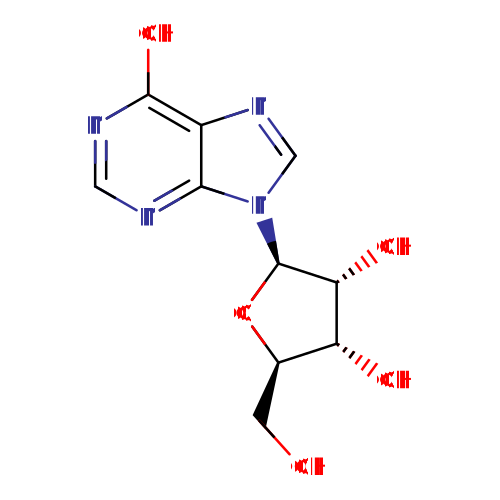
| Description | Inosine, also known as hypoxanthosine or panholic-L, belongs to the class of organic compounds known as purine nucleosides. Purine nucleosides are compounds comprising a purine base attached to a ribosyl or deoxyribosyl moiety. Inosine exists as a solid, possibly soluble (in water), and a moderately basic compound (based on its pKa) molecule. Inosine exists in all living species, ranging from bacteria to humans. Inosine is a potentially toxic compound. |
|---|
| Structure | |
|---|
| Synonyms | | Value | Source |
|---|
| 9-beta-D-Ribofuranosyl-9H-purin-6-ol | ChEBI | | 9-beta-D-Ribofuranosylhypoxanthine | ChEBI | | Hypoxanthine D-riboside | ChEBI | | Hypoxanthosine | ChEBI | | i | ChEBI | | Inosin | ChEBI | | Inosina | ChEBI | | Inosinum | ChEBI | | Inotin | Kegg | | 9-b-D-Ribofuranosyl-9H-purin-6-ol | Generator | | 9-Β-D-ribofuranosyl-9H-purin-6-ol | Generator | | 9-b-D-Ribofuranosylhypoxanthine | Generator | | 9-Β-D-ribofuranosylhypoxanthine | Generator | | (-)-Inosine | HMDB | | 1,9-Dihydro-9-b-D-ribofuranosyl-6H-purin-6-one | HMDB | | 1,9-Dihydro-9-beta-D-ribofuranosyl-6H-purin-6-one | HMDB | | 1,9-Dihydro-9-beta-delta-ribofuranosyl-6H-purin-6-one | HMDB | | 9-b-D-Ribofuranosyl-hypoxanthine | HMDB | | 9-beta-D-Ribofuranosyl-hypoxanthine | HMDB | | 9-beta-delta-Ribofuranosyl-hypoxanthine | HMDB | | 9-beta-delta-Ribofuranosylhypoxanthine | HMDB | | 9beta-D-Ribofuranosylhypoxanthine | HMDB | | 9beta-delta-Ribofuranosylhypoxanthine | HMDB | | Atorel | HMDB | | beta-D-Ribofuranoside hypoxanthine-9 | HMDB | | beta-delta-Ribofuranoside hypoxanthine-9 | HMDB | | beta-Inosine | HMDB | | HXR | HMDB | | Hypoxanthine 9-beta-D-ribofuranoside | HMDB | | Hypoxanthine 9-beta-delta-ribofuranoside | HMDB | | Hypoxanthine nucleoside | HMDB | | Hypoxanthine ribonucleoside | HMDB | | Hypoxanthine riboside | HMDB | | Hypoxanthine-9 beta-D-ribofuranoside | HMDB | | Hypoxanthine-9 beta-delta-ribofuranoside | HMDB | | Hypoxanthine-9-beta-D-ribofuranoside | HMDB | | Hypoxanthine-9-beta-delta-ribofuranoside | HMDB | | Hypoxanthine-9-D-ribofuranoside | HMDB | | Hypoxanthine-9-delta-ribofuranoside | HMDB | | Hypoxanthine-ribose | HMDB | | Indole-3-carboxaldehyde | HMDB | | Ino | HMDB | | Inosie | HMDB | | Iso-prinosine | HMDB | | Oxiamin | HMDB | | Panholic-L | HMDB | | Pantholic-L | HMDB | | Ribonosine | HMDB | | Selfer | HMDB | | Trophicardyl | HMDB |
|
|---|
| Chemical Formula | C10H12N4O5 |
|---|
| Average Molecular Weight | 268.2261 |
|---|
| Monoisotopic Molecular Weight | 268.080769514 |
|---|
| IUPAC Name | 9-[(2R,3R,4S,5R)-3,4-dihydroxy-5-(hydroxymethyl)oxolan-2-yl]-6,9-dihydro-3H-purin-6-one |
|---|
| Traditional Name | inosine |
|---|
| CAS Registry Number | 58-63-9 |
|---|
| SMILES | OC[C@H]1O[C@H]([C@H](O)[C@@H]1O)N1C=NC2=C(O)N=CN=C12 |
|---|
| InChI Identifier | InChI=1S/C10H12N4O5/c15-1-4-6(16)7(17)10(19-4)14-3-13-5-8(14)11-2-12-9(5)18/h2-4,6-7,10,15-17H,1H2,(H,11,12,18)/t4-,6-,7-,10-/m1/s1 |
|---|
| InChI Key | UGQMRVRMYYASKQ-KQYNXXCUSA-N |
|---|
| Chemical Taxonomy |
|---|
| Description | belongs to the class of organic compounds known as purine nucleosides. Purine nucleosides are compounds comprising a purine base attached to a ribosyl or deoxyribosyl moiety. |
|---|
| Kingdom | Organic compounds |
|---|
| Super Class | Nucleosides, nucleotides, and analogues |
|---|
| Class | Purine nucleosides |
|---|
| Sub Class | Not Available |
|---|
| Direct Parent | Purine nucleosides |
|---|
| Alternative Parents | |
|---|
| Substituents | - Purine nucleoside
- Glycosyl compound
- N-glycosyl compound
- 6-oxopurine
- Hypoxanthine
- Pentose monosaccharide
- Purinone
- Imidazopyrimidine
- Purine
- Pyrimidone
- Pyrimidine
- Monosaccharide
- N-substituted imidazole
- Vinylogous amide
- Tetrahydrofuran
- Heteroaromatic compound
- Azole
- Imidazole
- Secondary alcohol
- Oxacycle
- Azacycle
- Organoheterocyclic compound
- Alcohol
- Organonitrogen compound
- Organic nitrogen compound
- Organooxygen compound
- Organic oxide
- Organopnictogen compound
- Organic oxygen compound
- Hydrocarbon derivative
- Primary alcohol
- Aromatic heteropolycyclic compound
|
|---|
| Molecular Framework | Aromatic heteropolycyclic compounds |
|---|
| External Descriptors | |
|---|
| Ontology |
|---|
| Status | Detected and Quantified |
|---|
| Origin | |
|---|
| Biofunction | Not Available |
|---|
| Application | Not Available |
|---|
| Cellular locations | - Cytoplasm
- Lysosome
- Mitochondria
|
|---|
| Physical Properties |
|---|
| State | Solid |
|---|
| Experimental Properties | | Property | Value | Reference |
|---|
| Melting Point | 218 °C | Not Available | | Boiling Point | Not Available | Not Available | | Water Solubility | 15.8 mg/mL | YALKOWSKY,SH & DANNENFELSER,RM (1992) | | LogP | -2.1 | HANSCH,C ET AL. (1995) |
|
|---|
| Predicted Properties | |
|---|
| Spectra |
|---|
| Spectra | |
|---|
| Biological Properties |
|---|
| Cellular Locations | - Cytoplasm
- Lysosome
- Mitochondria
|
|---|
| Biospecimen Locations | - Brain
- Colostrum
- Erythrocyte
- Fibroblasts
- Intestine
- Kidney
- Liver
- Mammary Gland
- Milk
- Muscle
- Neuron
- Pancreas
- Placenta
- Platelet
- Prostate Tissue
- Semen
- Spleen
- Testis
|
|---|
| Pathways | |
|---|
| Normal Concentrations |
|---|
| |
| Brain | Expected but not Quantified | Not Quantified | Not Specified | Not Specified | Normal | | details | | Colostrum | Detected but not Quantified | Not Quantified | Not Specified | Not Specified | Normal | | details | | Erythrocyte | Expected but not Quantified | Not Quantified | Not Specified | Not Specified | Normal | | details | | Fibroblasts | Expected but not Quantified | Not Quantified | Not Specified | Not Specified | Normal | | details | | Intestine | Expected but not Quantified | Not Quantified | Not Specified | Not Specified | Normal | | details | | Kidney | Expected but not Quantified | Not Quantified | Not Specified | Not Specified | Normal | | details | | Liver | Detected but not Quantified | Not Quantified | Not Specified | Not Specified | Normal | | details | | Liver | Detected but not Quantified | Not Quantified | Not Specified | Not Specified | Normal | | details | | Liver | Detected but not Quantified | Not Quantified | Not Specified | Not Specified | Normal | | details | | Liver | Detected and Quantified | 833 +/- 140 nmol/g of tissue | Not Specified | Not Specified | Normal | | details | | Mammary Gland | Detected but not Quantified | Not Quantified | Not Specified | Not Specified | Normal | | details | | Mammary Gland | Detected but not Quantified | Not Quantified | Not Specified | Not Specified | Normal | | details | | Milk | Detected and Quantified | 0.970 +/- 0.420 uM | Not Specified | Not Specified | Normal | | details | | Milk | Detected and Quantified | 1 uM | Not Specified | Not Specified | Normal | | details | | Muscle | Detected but not Quantified | Not Quantified | Not Specified | Not Specified | Normal | | details | | Muscle | Detected and Quantified | 301.14 +/- 26.11 uM | Not Specified | Not Specified | Normal | | details | | Muscle | Detected but not Quantified | Not Quantified | Not Specified | Not Specified | Normal | | details | | Muscle | Detected and Quantified | 356.78 +/- 41.47 uM | Not Specified | Not Specified | Normal | | details | | Muscle | Detected and Quantified | 395.56 +/- 38.59 uM | Not Specified | Not Specified | Normal | | details | | Muscle | Detected and Quantified | 427.49 +/- 33.47 uM | Not Specified | Not Specified | Normal | | details | | Neuron | Expected but not Quantified | Not Quantified | Not Specified | Not Specified | Normal | | details | | Pancreas | Expected but not Quantified | Not Quantified | Not Specified | Not Specified | Normal | | details | | Placenta | Expected but not Quantified | Not Quantified | Not Specified | Not Specified | Normal | | details | | Platelet | Expected but not Quantified | Not Quantified | Not Specified | Not Specified | Normal | | details | | Prostate Tissue | Expected but not Quantified | Not Quantified | Not Specified | Not Specified | Normal | | details | | Semen | Detected but not Quantified | Not Quantified | Not Specified | Not Specified | Normal | | details | | Spleen | Expected but not Quantified | Not Quantified | Not Specified | Not Specified | Normal | | details | | Testis | Detected and Quantified | 225 +/- 95 nmol/g of tissue | Not Specified | Not Specified | Normal | | details |
|
|---|
| Abnormal Concentrations |
|---|
| Not Available |
|---|
| External Links |
|---|
| HMDB ID | HMDB0000195 |
|---|
| DrugBank ID | DB04335 |
|---|
| Phenol Explorer Compound ID | Not Available |
|---|
| FooDB ID | FDB011802 |
|---|
| KNApSAcK ID | C00019692 |
|---|
| Chemspider ID | 5799 |
|---|
| KEGG Compound ID | C00294 |
|---|
| BioCyc ID | INOSINE |
|---|
| BiGG ID | 34525 |
|---|
| Wikipedia Link | Inosine |
|---|
| METLIN ID | 84 |
|---|
| PubChem Compound | 6021 |
|---|
| PDB ID | Not Available |
|---|
| ChEBI ID | 17596 |
|---|
| References |
|---|
| Synthesis Reference | Shi, Qingshan; Qiu, Yutang; Li, Liangqiu; Lin, Xiaoping. New inosine-producing bacterium and method for producing inosine. Faming Zhuanli Shenqing Gongkai Shuomingshu (2003), 6 pp. |
|---|
| Material Safety Data Sheet (MSDS) | Not Available |
|---|
| General References | - Schlimme E, Raezke KP, Ott FG: Ribonucleosides as minor milk constituents. Z Ernahrungswiss. 1991 Jun;30(2):138-52. [PubMed:1897275 ]
- Schlimme E, Martin D, Meisel H: Nucleosides and nucleotides: natural bioactive substances in milk and colostrum. Br J Nutr. 2000 Nov;84 Suppl 1:S59-68. [PubMed:11242448 ]
|
|---|