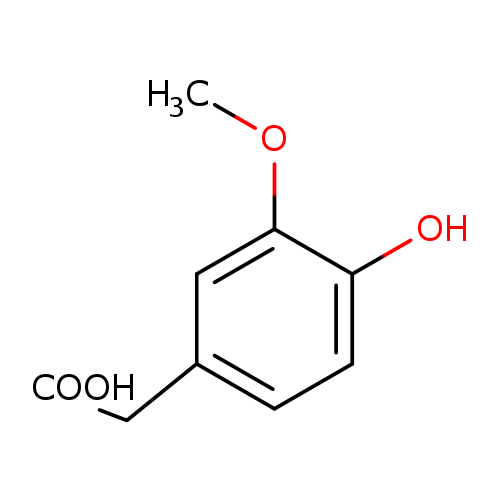
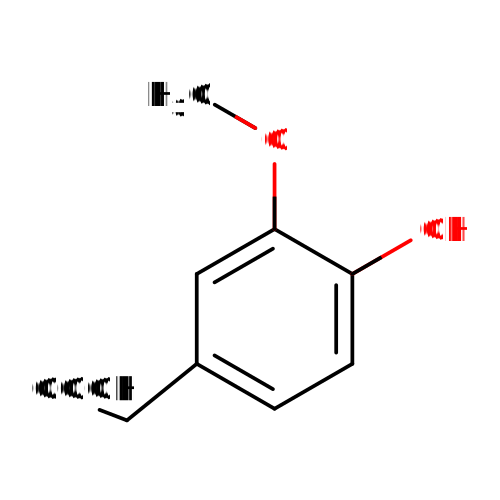
Homovanillic acid, also known as vanillacetate or homovanillate, belongs to the class of organic compounds known as methoxyphenols. Methoxyphenols are compounds containing a methoxy group attached to the benzene ring of a phenol moiety. Homovanillic acid exists as a solid, possibly soluble (in water), and an extremely weak basic (essentially neutral) compound (based on its pKa) molecule. Homovanillic acid exists in all living species, ranging from bacteria to humans. Homovanillic acid participates in a number of enzymatic reactions, within cattle. In particular, Homovanillic acid can be biosynthesized from homovanillin; which is catalyzed by the enzyme aldehyde dehydrogenase, dimeric nadp-preferring. In addition, Homovanillic acid and pyrocatechol can be biosynthesized from 3,4-dihydroxybenzeneacetic acid and guaiacol through its interaction with the enzyme catechol O-methyltransferase. In cattle, homovanillic acid is involved in the metabolic pathway called the tyrosine metabolism pathway. Homovanillic acid is a potentially toxic compound.
belongs to the class of organic compounds known as methoxyphenols. Methoxyphenols are compounds containing a methoxy group attached to the benzene ring of a phenol moiety.
Notably, a panel of four serum metabolites (asymmetric dimethylarginine, proline, leucine, and homovanillate) at 8 wks prepartum, and another panel (asymmetric dimethylarginine, methylmalonate, citrate, and spermidine) at 4 wks prepartum, demonstrated predictive ability as urinary biomarkers for SCM risk (AUC = 0.88; p = 0.02 and AUC = 0.88; p = 0.03, respectively).
Written in the paper as “homovanillate” and “subclinical mastitis”
Catalyzes the O-methylation, and thereby the inactivation, of catecholamine neurotransmitters and catechol hormones. Also shortens the biological half-lives of certain neuroactive drugs, like L-DOPA, alpha-methyl DOPA and isoproterenol (By similarity).